Last updated: 1 October 2026
9 situations explained by the dentist
Losing a tooth is often more than a dental problem. You may find it harder to chew, feel self-conscious when you smile, or wonder whether you need to act quickly. Many patients from Schiedam, Rotterdam and the surrounding area therefore ask themselves:
When is a dental implant needed?
A dental implant may be considered when a tooth is missing and replacement is important for chewing function, appearance or the stability of the dentition. Even so, a missing tooth does not automatically mean an implant is always the best solution. Sometimes a bridge, a removable partial denture, an implant overdenture or a temporary solution is a better fit.
At 3D Tandarts in Schiedam, easy to reach from Rotterdam-West, Delfshaven, Spaanse Polder, Overschie and other parts of Rotterdam, we therefore assess not only the gap in your teeth, but also your jawbone, the neighbouring teeth, your health, your wishes, your budget and your expectations. The aim is not to recommend an implant by default, but to determine which solution makes the most sense in your situation.
Are you missing a tooth, or does a tooth need to be extracted soon?
Then do not wait too long to seek advice. The sooner your situation is assessed, the better the dentist can judge whether an implant, a bridge or a temporary solution is suitable.
When is a dental implant needed?
Short answer
A dental implant may be considered when one or more teeth are missing and replacement is desired to restore chewing function or achieve a natural appearance. An implant is often chosen because it functions independently and the adjacent teeth usually do not need to be prepared.
An implant is often considered when:
- you are missing one tooth;
- you are missing several teeth;
- a tooth can no longer be saved;
- the neighbouring teeth are healthy;
- a bridge is not an ideal solution;
- a denture is unstable;
- a front tooth is missing;
- a molar is missing;
- an earlier treatment has failed;
- you want to limit bone loss or shifting of teeth.
Important: an implant is usually not an emergency treatment, but timely advice is wise. After tooth loss, teeth can shift and the jawbone can slowly shrink. As a result, treatment can sometimes become more complicated later.
What exactly is a dental implant?
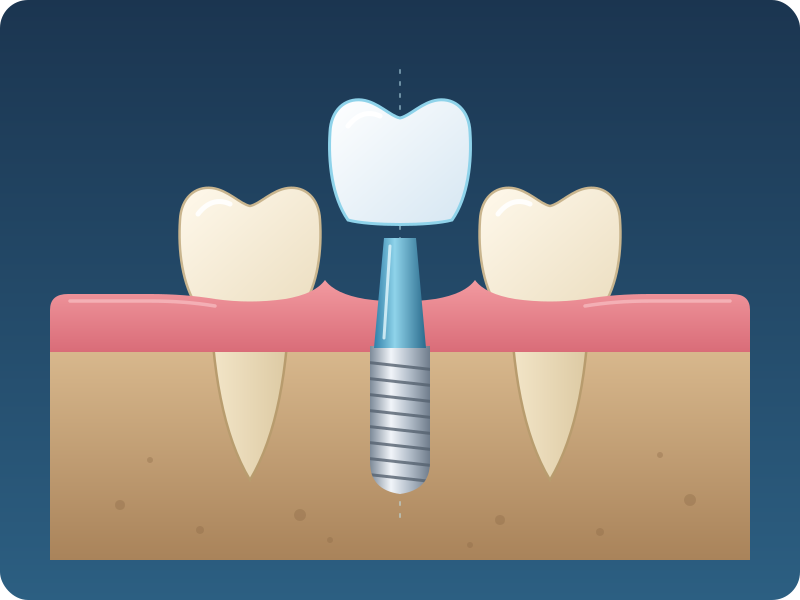
A dental implant is an artificial tooth root that is placed in the jawbone. It is usually made of titanium or another biocompatible material. The implant itself is therefore not the visible tooth, but the foundation to which a crown, bridge or denture is later attached.
A complete implant restoration usually consists of three parts:
- The implant: the artificial tooth root in the jawbone.
- The abutment: the connection between the implant and the crown.
- The implant crown, bridge or denture: the visible, functional part.
When the implant integrates well with the jawbone, it can act as a solid foundation for a new tooth. This integration is called osseointegration.
For patients, an implant often feels natural, because it is fixed in place and cannot be taken out like a removable denture. This can help with chewing, speaking, smiling and self-confidence.
In which situations may an implant be needed?
1. You are missing one tooth
When you are missing one tooth and the teeth next to it are healthy, an implant is often a good option. With a traditional bridge, the teeth beside the gap usually need to be prepared. If these teeth are still intact, that is not always desirable.
An implant can then be a standalone solution: the missing tooth is replaced without sacrificing healthy neighbouring teeth.
2. You are missing several teeth
Implants can also help when several teeth are missing. Sometimes it is not necessary to place a separate implant for every missing tooth. Two implants, for example, can support a bridge that replaces several teeth.
This depends on the location, the amount of bone, the bite and the load during chewing.
3. A tooth has to be extracted
Sometimes a tooth can no longer be saved. This can happen because of severe decay, a deep fracture, advanced periodontitis or a failed root canal treatment.
If it is clear beforehand that a tooth has to be removed, it is wise to discuss in good time what the best next step is. Sometimes an implant can be placed later. In other cases healing or bone grafting is needed first.
4. A bridge is not an ideal solution
A bridge can be a good treatment, but it is not always the best choice. When the teeth next to the gap are healthy, preparing them can mean an unnecessary loss of healthy tooth structure.
In such a situation an implant can be attractive, because the neighbouring teeth usually remain untouched. Not sure which solution suits you best? To learn more about the differences between an implant and a bridge, read our article: “Implant or bridge: which is the best choice?“.
There we explain the advantages and disadvantages, costs, lifespan and treatment pathways of both solutions in detail.
5. Your denture is not stable
An unstable denture can cause a lot of everyday trouble. Patients often notice it when talking, smiling or eating. Sore spots and insecurity are also common.
Implants can be used to secure an implant overdenture better. This can make a big difference to comfort and self-confidence.
6. A front tooth is missing
With a missing front tooth, aesthetics play a big role. Many patients worry about a visible gap, their smile or how others react.
An implant can be a natural solution in the visible zone, but the planning must be done carefully. Gum shape, bone volume, colour, shape and position of the crown are all important.
If it concerns a visible tooth, we also discuss temporary solutions. So you do not necessarily have to walk around with a visible gap for a long time.
7. A molar is missing
Molars are important for chewing. When a molar is missing, the chewing pressure can be distributed differently. Other teeth can be loaded more heavily and eating can become less comfortable.
An implant can help restore chewing function, especially when it concerns an important chewing area.
8. An earlier treatment has failed
Sometimes an existing crown, bridge or root canal treatment is lost. If the original tooth can no longer be preserved, an implant can make a new treatment plan possible.
Here the dentist first looks at the cause of the problem. If, for example, gum problems or overloading play a part, those factors must be taken into account to prevent a recurrence.
9. You want to prevent bone loss or shifting
After tooth loss, the jawbone in that spot can slowly shrink. Surrounding teeth can also move towards the gap. This does not happen equally fast in everyone, but it is an important point of attention.
An implant can help restore function in that spot and load the jawbone better.

Book an implant consultation if you recognise yourself in this
A consultation is wise if:
- you are missing a tooth;
- a tooth needs to be extracted soon;
- you are unsure between an implant and a bridge;
- you are afraid that teeth will shift;
- you want to know whether you have enough jawbone;
- you are missing a front tooth and feel insecure about your smile;
- you have difficulty chewing;
- your denture is unstable;
- you want to know what an implant would cost in your situation;
- you are looking for a dentist for implants in Schiedam, Rotterdam, Rotterdam-West, Vlaardingen or the surrounding area.
A consultation does not automatically mean you will get an implant. Sometimes we actually recommend a bridge, a temporary solution or first treating gum problems. The aim is to get clarity before you make a decision.
You can easily book your appointment here.
When is an implant usually the best choice?
When the neighbouring teeth are healthy
If the teeth next to the gap are healthy, an implant is often attractive. The neighbouring teeth usually do not need to be prepared, so healthy tooth structure is preserved.
For many patients this is an important reason to choose an implant.
When aesthetics matter
Especially with front teeth, appearance is very important. A missing tooth affects not only chewing, but often also smiling, speaking and self-confidence.
An implant can help restore the natural shape of the teeth. However, good planning is essential, because the gum and jawbone in the visible zone must be assessed precisely.
When chewing function needs to be preserved
A missing molar can reduce chewing comfort. Some patients unconsciously start chewing on one side, which puts extra load on other teeth.
An implant can help distribute the chewing force better.
When bone loss needs to be prevented
After the loss of a tooth, the jawbone in that spot is loaded less. As a result, the bone can slowly decrease. An implant can help put functional load on that spot again.
This does not mean an implant always has to be placed immediately, but it does mean that timely assessment is wise.
When is an implant not needed?
Good implant advice is not only about when an implant can be placed, but also about when it is not the best choice.
When a bridge may be more suitable
If the teeth next to the gap already have large fillings, crowns or damage, a bridge can sometimes make more sense. In that case preparing the neighbouring teeth is less of an objection.
When a removable solution is sufficient
Not every patient wants or needs a fixed solution. Sometimes a removable partial denture, acrylic or metal-framework, is a suitable choice, for example for budget reasons or when several teeth are missing.
When other problems need to be treated first
With active infections, untreated periodontitis, poor oral hygiene or certain medical circumstances, it can be wiser to postpone implant treatment for the time being.
That does not mean an implant is impossible. It means the foundation must first be healthy enough to give the treatment the greatest possible chance of success.
When you are not ready to decide yet
Sometimes you mainly need time, explanation and an overview. That is also a valid reason not to treat straight away.
At 3D Tandarts, an implant consultation is meant to give you clarity. So you do not need to know yet whether you want an implant. During a consultation we look together at the options, their advantages and disadvantages, and which solution best fits your situation.
What happens if you do not replace a missing tooth?
Many patients wonder: “Can’t I just do nothing?” Sometimes you can, but not always without consequences.
Teeth can shift
Teeth tend to move towards an empty space. The opposing tooth can also overerupt because it no longer has contact.
This can lead to misalignment and a changed bite, which can make later treatment more complicated.
The jawbone can shrink
After tooth loss, part of the jawbone gradually disappears. This process is called bone resorption.
The longer a tooth is missing, the greater the chance that the available bone decreases. If an implant is still wanted later, bone grafting may sometimes be needed first.
Chewing can become less comfortable
A missing molar can mean you chew less efficiently or start avoiding certain foods.
Some patients only realise how much function they had lost once the missing tooth is replaced.
Your smile and self-confidence can change
A missing tooth, especially in the visible part of the mouth, can affect how freely you smile, talk or have your photo taken.
Many people feel insecure about this. That is entirely understandable. During a consultation we therefore discuss not only the technical options, but also what matters to you personally.
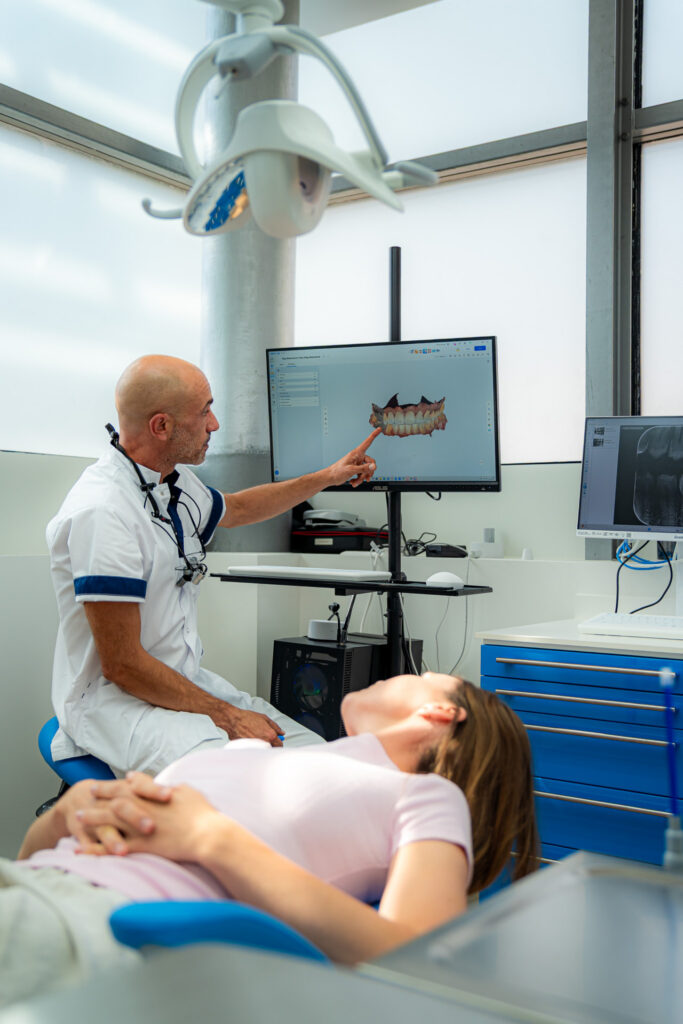
Do not wait too long to seek advice if…
It is wise to seek advice in good time when:
- it concerns a front tooth;
- you have pain or an infection;
- a tooth is mobile;
- a tooth needs to be extracted soon;
- you have difficulty chewing;
- you have been missing a tooth for a longer time;
- you notice that teeth are shifting;
- your denture is becoming less and less stable.
Waiting is sometimes possible, but not always wise. An early consultation helps to determine how urgent things really are and which treatment options remain available.
Conclusion: when is a dental implant needed?
A dental implant can be an appropriate solution when a tooth is missing and replacement is important for chewing function, appearance or the stability of the dentition.
Even so, an implant is not automatically the best choice for everyone. Sometimes a bridge, a removable restoration or even waiting for the time being is the wiser solution. That is why it is important to look not only at the gap in your teeth, but at your overall oral health, your wishes and your personal situation.
Many patients mainly want an answer to one question: “Do I really need an implant?”
The answer is different for every patient. A professional assessment gives clarity about the options, the risks, the alternatives and the expected costs. That way you can make a well-considered decision without rushed choices.
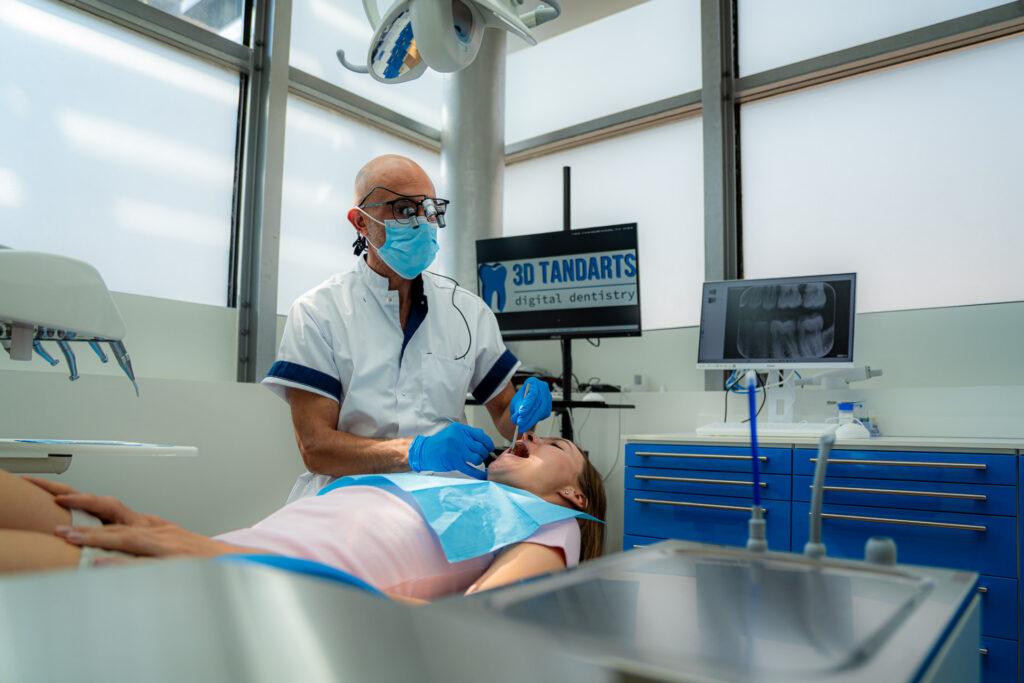
Not sure whether you need an implant?
Are you missing a tooth? Or have you heard that a tooth needs to be extracted soon?
Then it is wise to have your situation assessed in good time. The sooner it is clear what the options are, the greater the chance that all treatment options are still open.
At 3D Tandarts in Schiedam, during an implant consultation we look at, among other things:
- whether an implant is possible and sensible in your situation;
- whether there is enough jawbone;
- what the alternatives are;
- what the advantages and disadvantages of each option are;
- what costs you can expect;
- which treatment best fits your wishes.
You do not have to make a decision during a consultation. The aim is precisely to gain clarity about what the best solution is for you.
Why patients from Schiedam and Rotterdam choose 3D Tandarts
- Digital CBCT and 3D diagnostics
- Personal treatment advice without pressure
- Experience with implant dentistry and complex dental situations
- Easy to reach from Schiedam, Vlaardingen and Rotterdam
- Focus on durable, functional and aesthetic results
Book an implant consultation
Want to know whether an implant is the right choice for you?
Contact 3D Tandarts in Schiedam for a personal implant consultation, or simply book an appointment straight away here. Together we look at which treatment best suits your teeth, your wishes and your future.
3D Tandarts – Schiedam
Implant dentistry • Digital 3D planning • Personal dental care
Easy to reach from Schiedam, Rotterdam, Vlaardingen and the South Holland region.
Knowledge base
Latest articles

Hidden root canals: why a tooth can keep causing problems after root canal treatment
Pain after root canal treatment? Learn how a hidden or missed canal happens and how the microscope and CBCT help. Book an assessment in Schiedam.

Surgical microscope for root canal treatment in Schiedam
What does a surgical microscope do in root canal treatment? See how precision and CBCT help save your tooth. Book at 3D Tandarts in Schiedam.
Implant consultation in Schiedam: find out which treatment suits you
Is a dental implant right for you? Find out what an implant consultation in Schiedam involves: examination, advice and a treatment plan. Book today.
Questions about your situation?
During a consultation we look at your situation and discuss the options.