Diagnostics
Intraoral scan in Schiedam: your teeth captured digitally
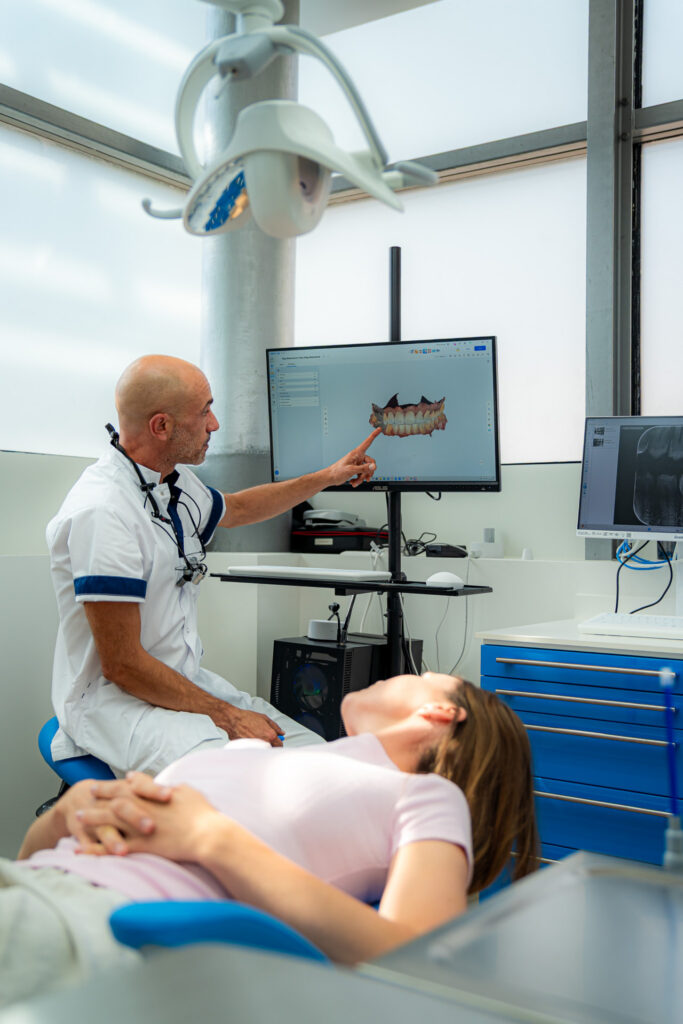
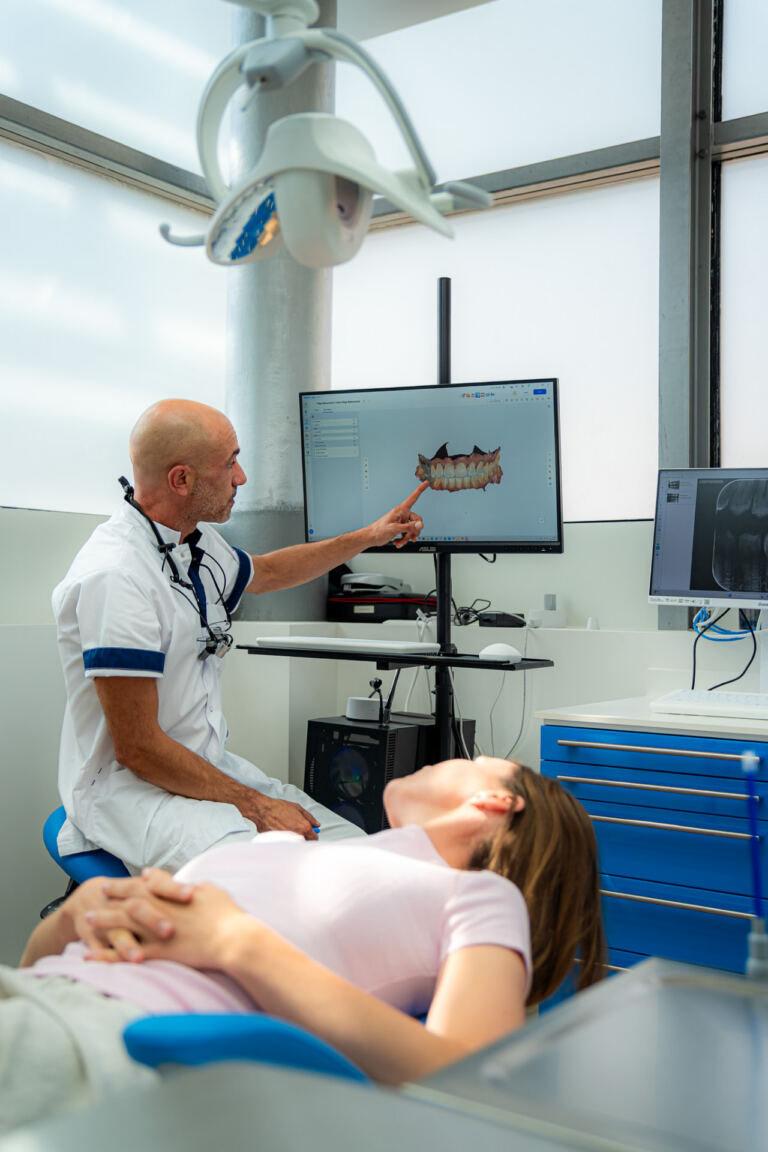
Do you find a traditional impression of your teeth unpleasant, or would you like to know how we capture your teeth digitally? At 3D Tandarts Schiedam we use a 3D intraoral scanner to record your mouth accurately and comfortably. This creates a digital image the dentist can use for explanation, design and planning.
What do we use the intraoral scan for in Schiedam?
With the intraoral scan we make an accurate 3D model of your teeth, without printing material. We use this model for:
- Crowns, bridges, onlays and facings: the digital design of your restoration.
- Bite Analysis: how to close your upper and lower teeth together. This makes wear, pressure points and bite problems visible. By comparing scans over the years, we also see how your bite changes.
- Digital planning of implants: the scan is combined with a 3D X-ray (CBCT). For example, we plan in advance the place of the implant and the crown or bridge that comes on it. Read more about guided implant surgery.
- Aesthetic planning: a digital example of a possible result, for example in facings or a smile design. This way you and the dentist assess what suits you.
- Aligners: the starting point for treatment with transparent brackets and for discussing possible dental movements.
The application that makes sense varies from one person to another. The dentist will discuss this with you in advance.
What’s the difference between an intraoral scan and a CBCT scan?
The intraoral scan captures the outside of your teeth and gums digitally. A CBCT scan is a 3D X-ray that shows, among other things, the jawbone and the tooth roots. For some treatments, such as implant treatment, we combine both types of imaging. The dentist determines what is necessary in your situation.
Carefully assessed
Digitally captured
With our 3D intraoral scanner your mouth is recorded digitally step by step, often without traditional impressions using impression material. The images can support the dentist in explanation, design and careful treatment planning, tailored to your situation.
Our approach
Part of a careful examination
The dentist decides when an intraoral scan is useful and explains in advance what the digital images will be used for. That way you know why this step is taken and what you can expect from it in the rest of your treatment.
What matters
- Accurate digital representation of your teeth
- Often no traditional impressions needed
- Supports explanation, design and treatment planning
Frequently asked questions
Want to know more about intraoral scan?
What can I expect beforehand?
No special preparation is needed. It helps to consider your questions and concerns before your visit.
Is an intraoral scan suitable for everyone?
That depends on your oral situation. The dentist assesses what is possible and appropriate during an examination.
Can I first make an appointment for information?
Yes. You can request an appointment to discuss your wishes; advice follows only after assessment by the dentist.
Is an intraoral scan less pleasant than an impression with impression material?
Many patients find a digital scan more comfortable than a traditional impression, because no impression material is placed in the mouth. The dentist can tell you what applies in your situation.
Where is the practice located?
3D Tandarts is at Stationsplein 12 in Schiedam, within walking distance of the station. Patients from the surrounding area are also very welcome.
Further reading
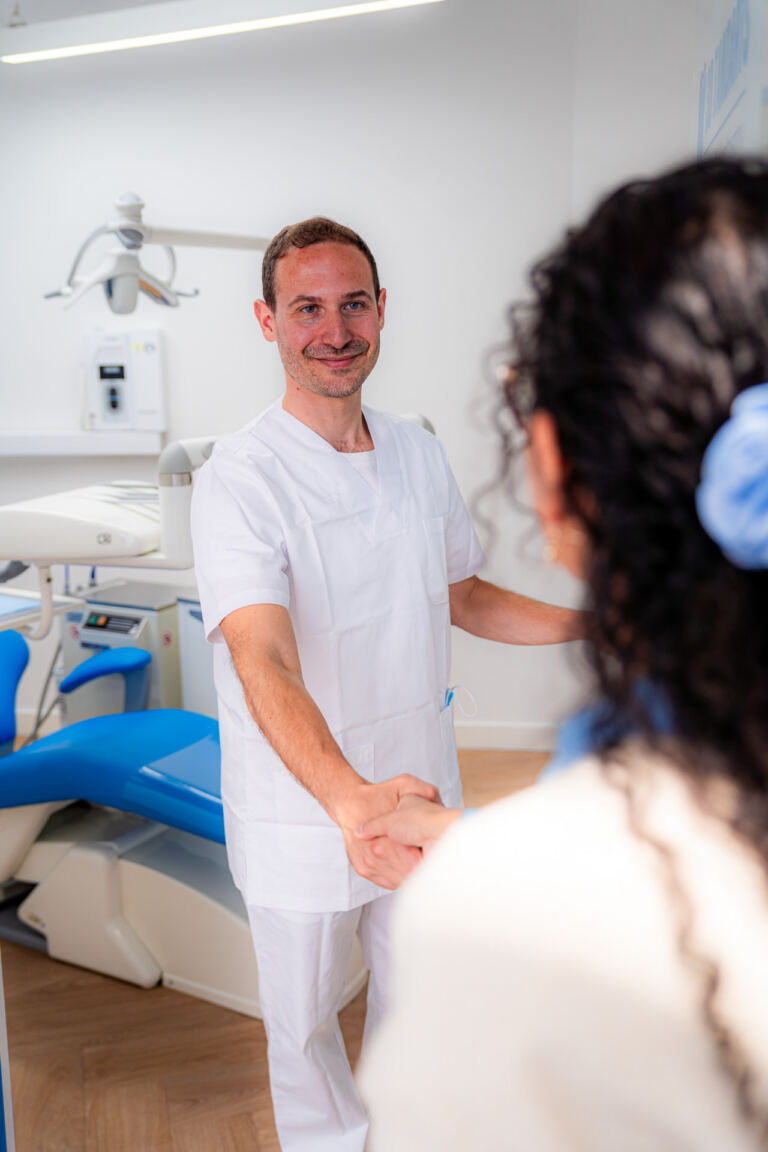
3D implant planning in Schiedam: precise and carefully prepared
Learn how CBCT, digital implant planning and a surgical guide can help prepare the position of a dental implant carefully.
Discuss your situation
Request an appointment. The dentist will assess which care suits your situation.