Dental hygiene
Laser treatment at 3D Tandarts in Schiedam
A dental laser is not a treatment in itself, but an additional technique that can assist in many treatments. At 3D Tandarts, we work with a laser that has three wavelengths. This allows us to use it for various purposes: from sensitive teeth and gums to teeth whitening and stopping bleeding with crowns and bridges. We only use the laser if it truly adds something in your situation, and we always discuss that beforehand.
Request appointment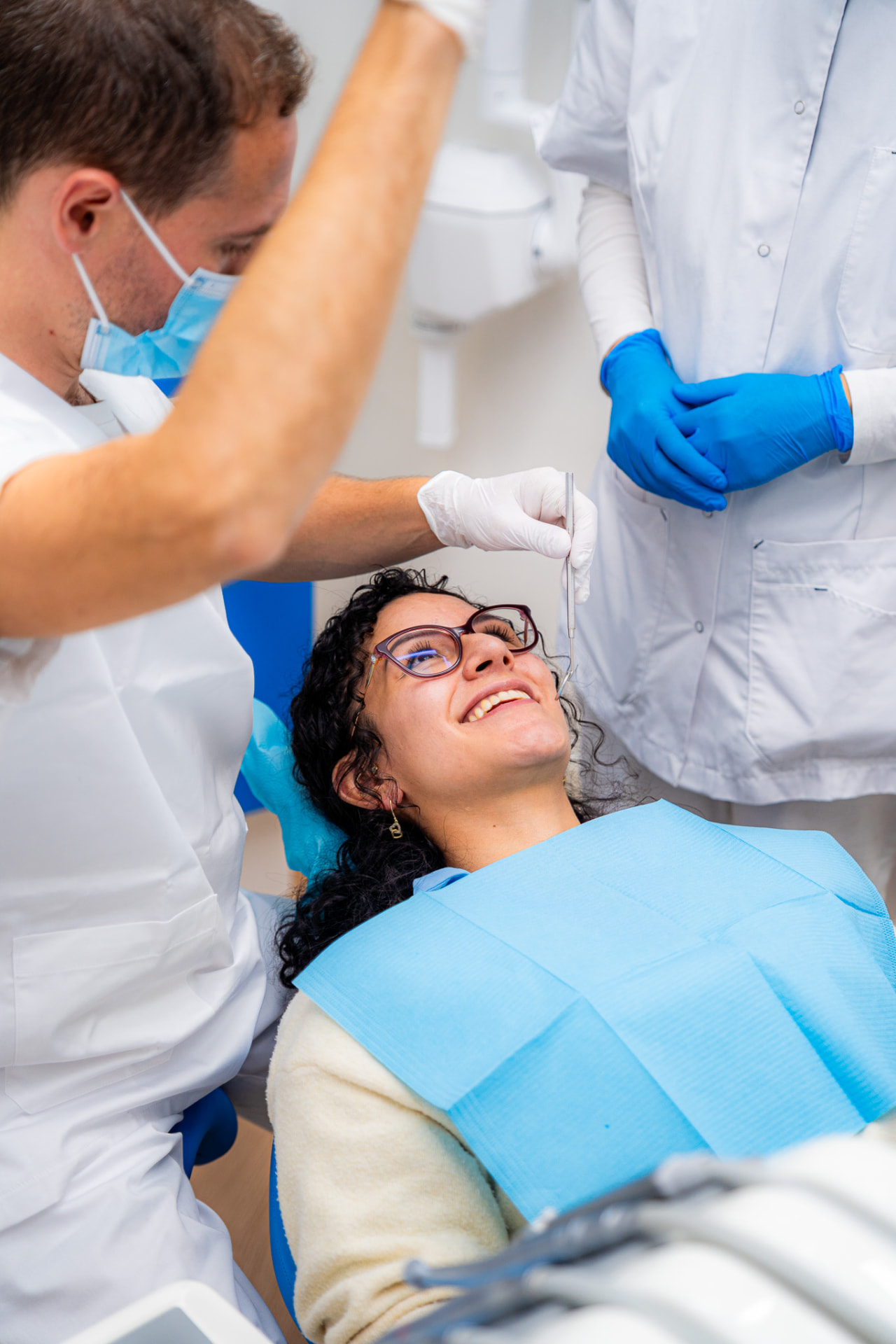
What do we use the laser for?
Sensitive teeth
For sensitive tooth necks, laser light can help reduce sensitivity to cold, heat, or sweet foods. We often combine this with other measures. We will discuss what suits your situation.
Teeth whitening
During whitening, the laser can activate the whitening agent. The result varies per person. We discuss in advance what you can expect.
Less pain after a treatment
After, for example, tooth extraction, gum treatment, or surgery, low-power laser light can contribute to comfort and wound healing.
Bleeding gums with crowns and bridges
When preparing a tooth for a crown or bridge, or before a scan, inflamed gums may bleed. With the laser, we can treat the gums and limit the bleeding. This way we work in a dry area, and the result is more precise.
Gum treatment
After cleaning below the gumline, we can additionally disinfect certain deep pockets with the laser. The laser does not replace the cleaning, but supports it where it is useful.
Root canal treatment
For complex or recurring inflammations, the laser can help to further disinfect the root canals.
Other applications
Treatment of inflamed gums around implants (peri-implantitis), minor gum procedures, and treatment of canker sores or other painful spots in the mouth.
What is the added value of the laser?
The laser can help to work more comfortably and accurately and to further reduce bacteria in hard-to-reach places. It is not a guarantee of a better result: the laser does not replace ordinary treatment, and good daily oral care remains the most important.
How does a laser treatment proceed?
- Examination and explanation: the dentist assesses your situation and explains if and why the laser is useful.
- Treatment: the laser is used as an addition, usually quickly and without drilling. You may feel some warmth or tingling.
- Aftercare: clear instructions and, if necessary, a check-up.
For sensitive areas, we can anesthetize locally.
Is the laser safe?
The laser is used by a trained practitioner, with settings adjusted to your situation and the area in the mouth. We only use it when there is a clear reason for it.
What does a laser treatment cost?
Laser support is usually part of the treatment in which it is used. Whether there are additional costs depends on the application. You will receive a clear estimate in advance.
Carefully assessed
Personal assessment
The dentist assesses your oral health and discusses your wishes, possibilities and alternatives before recommending laser treatment.
Our approach
A clear process
Digital diagnostics and modern techniques are used where appropriate. We explain each step before you make a decision together with the dentist.
What matters
Careful examination before treatment
Clear explanation of options and alternatives
Planning tailored to your personal situation
Frequently asked questions
Laser treatment
What is the laser used for?
For sensitive teeth, whitening, pain after a treatment, gum and root canal treatments, and stopping bleeding with crowns and bridges. The dentist explains whether the laser is useful in your situation.
Is a laser treatment suitable for everyone?
No. First, an examination takes place and we discuss the possibilities.
Does the laser replace a regular treatment?
No. The laser is an addition within a treatment plan.
Does it hurt?
Usually the laser is well tolerated. For sensitive spots, we can use local anesthesia.
Does the laser always work?
That differs per person and per application. We discuss beforehand what you can realistically expect.
Discuss your situation
Request an appointment. The dentist will assess which care suits your situation.