Implantology
Implant-retained dentures in Schiedam: more stability for your denture
Does your denture slip while eating, come loose when you laugh, or do you need adhesive paste every day? An implant overdenture clicks onto implants in the jaw. This makes it much more secure than a regular denture, but you can remove it yourself to clean it thoroughly. At 3D Tandarts, we first examine why your denture is loose. Sometimes an adjustment or a new denture is enough, sometimes an implant-retained denture is the appropriate next step.

Why is a denture loose?
After tooth loss the jawbone changes. Bone volume can decrease, especially in the first period after tooth loss, and further changes may occur afterwards. A denture that initially fit well will therefore fit less well over time. You notice this especially in the lower jaw: it has less support surface and moves along with the tongue, lips, and chewing muscles. A loose denture is more than a technical problem: it can make eating, talking, and laughing difficult.
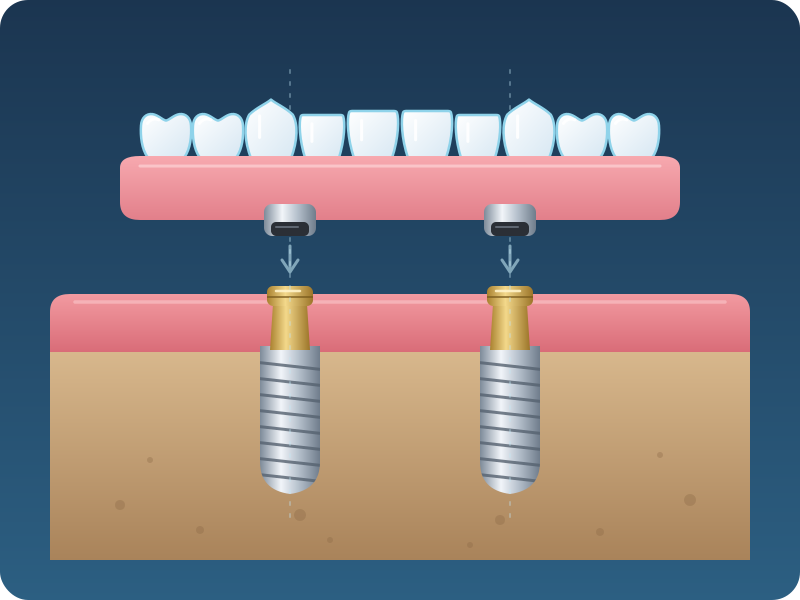
What is an implant-retained denture?
An implant-retained denture is a removable denture that attaches to two or more implants. The implants have attachments, such as stud attachments or a bar. Which system is suitable depends on your jaw, the number of implants, and the available space.
Standard denture, implant-retained denture, or fixed teeth?
- Standard denture: rests on the gums, removable by yourself, no surgery needed.
- Implant-retained denture: attaches to implants, can be removed by the patient, and requires a minor surgical procedure.
- Fixed teeth on implants: firmly attached, usually not removable by yourself, surgery required.
Who is an implant-retained denture suitable for?
Mainly for people with a full denture that has too little grip, often due to loss of jawbone. Whether it suits you depends on your jawbone, gums, oral hygiene, health, and expectations. Sometimes another treatment is needed first, such as a gum treatment or a new denture.
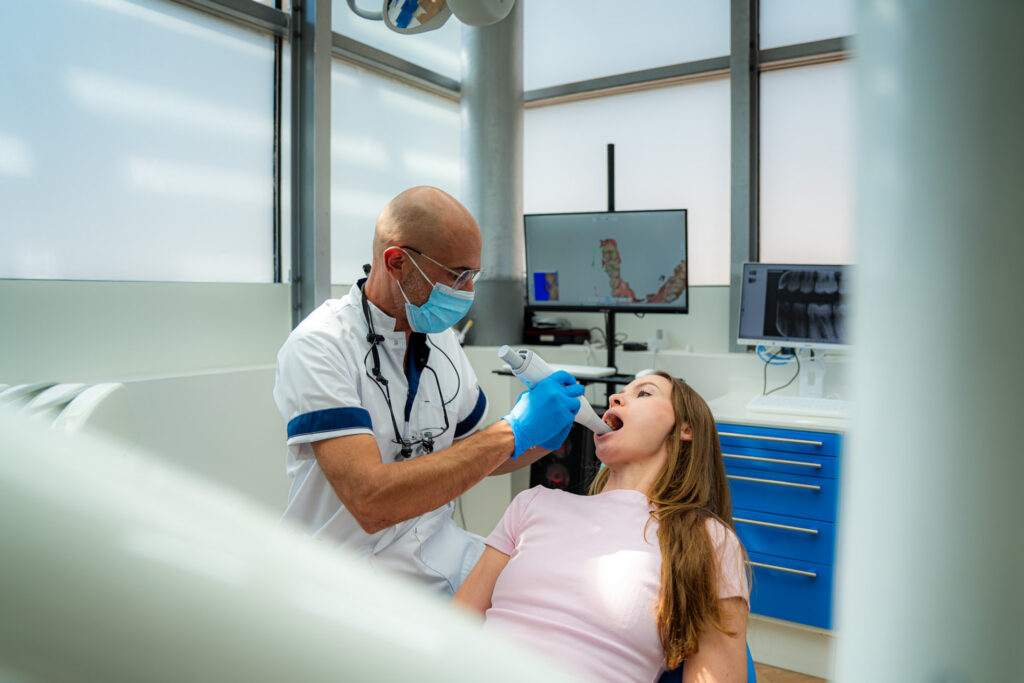
How do we make an implant-retained denture?
- Assessment of your current denture: fit, bite, pressure points, and wear.
- Examination of the jaw: with a CBCT scan (3D X-ray) we assess the jawbone and important structures such as nerves.
- Digital planning: the implants are digitally planned in advance, if necessary with a surgical guide (guided implant surgery).
- Placement and healing: the implants are placed under local anaesthesia. A healing period follows in which the implants integrate with the jawbone (osseointegration).
- Dentures and aftercare: the denture is made or your current denture is adjusted, followed by check-ups.
How many implants does an implant-retained denture need?
In the lower jaw, two implants are often enough. In the upper jaw, usually more are needed. The exact number depends on your jawbone, bite, and the chosen system, and is determined individually.
Implant-retained denture costs and reimbursement
The costs depend on the jaw, the number of implants, the denture, and the preliminary examination. Under certain conditions, a denture may be partially reimbursed by the basic insurance, for example, in the case of a significantly shrunken jaw. Often, prior approval from your health insurer is required. During the consultation, we discuss what applies to you and which costs you pay yourself.
Advantages and points of attention
- More support when eating and talking, less or no adhesive paste
- Requires surgery and a series of multiple appointments
- Daily cleaning remains necessary, also around the implants
- The attachment components can wear over time and are checked during appointments
Easily reached from Rotterdam for all your appointments
An implant-retained denture involves multiple appointments and check-ups. Our practice is located right by Schiedam Centrum station, easily accessible from Rotterdam, Vlaardingen, Delft, and Maassluis. On Wednesdays, we are open until 8:00 PM.
Discuss your situation
Schedule an evaluation of your denture. Together we will see which solution suits you, without obligations.
Carefully assessed
Personal assessment
The dentist assesses your oral health and discusses your wishes, possibilities and alternatives before recommending an implant-retained denture.
Our approach
A clear process
Digital diagnostics and modern techniques are used where appropriate. We explain each step before you make a decision together with the dentist.
What matters
- Careful examination before treatment
- Clear explanation of options and alternatives
- Planning tailored to your personal situation
Frequently asked questions
Frequently asked questions about implant-retained dentures
Is an implant-retained denture removable?
Yes. It attaches to implants, but you remove it yourself to clean it. It is therefore not the same as a fixed bridge on implants.
Does getting implants hurt?
The procedure is done under local anaesthesia. Afterwards, you may experience some sensitivity, swelling, or pain. You will receive clear instructions beforehand.
Can I have my current denture evaluated first?
Yes, that is often the best first step. Sometimes an adjustment (filling or rebasing) or a new denture is already sufficient.
What if I am not suitable now?
Then we discuss what is needed, for example, additional examination, a gum treatment, or another solution.
Is an implant-supported denture suitable for everyone?
No. The dentist assesses this after an examination, looking at things such as the amount of jawbone and your general health, and discusses which solution suits you best.
More about implant-retained dentures
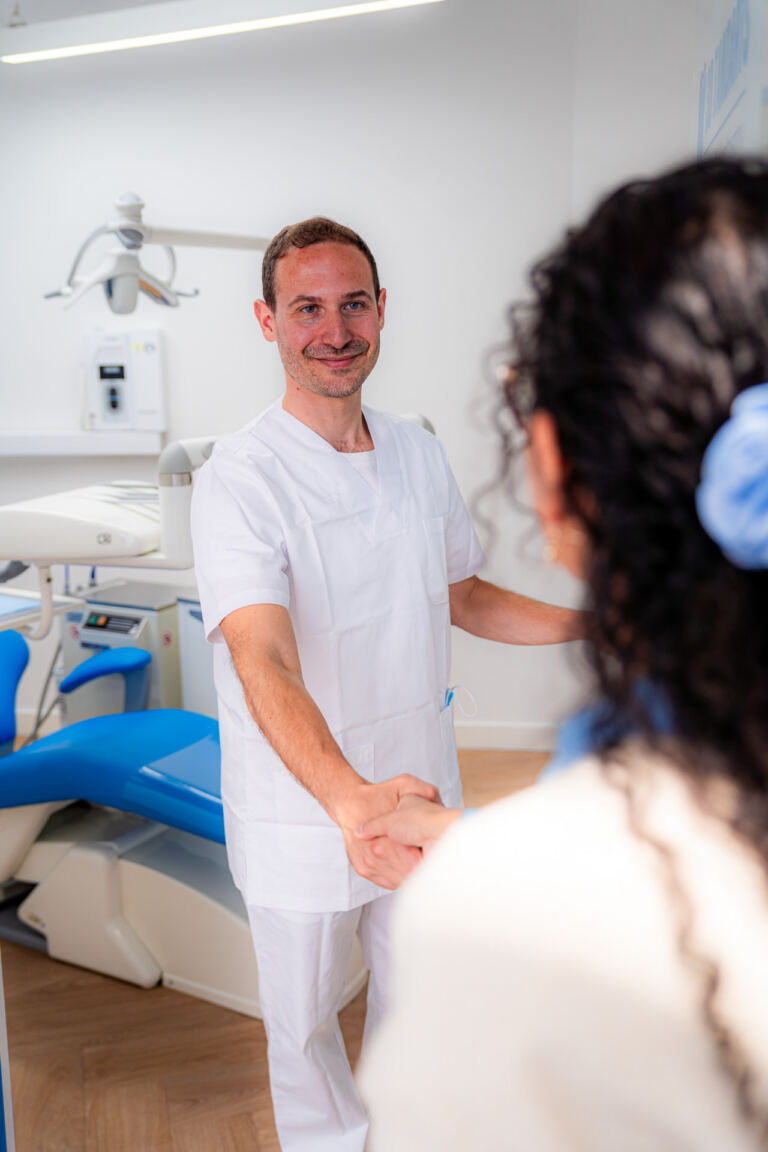
Implant overdenture in Schiedam
Implant overdenture in Schiedam: how it works, who it is suitable for, its pros, cons and costs. Book an assessment with 3D Tandarts.
Dental implant with bone loss: is it possible?
Bone loss does not automatically rule out a dental implant. Find out how 3D diagnostics and bone grafting help, and book a consultation in Schiedam.
Discuss your implant-retained denture in Schiedam
Request an appointment. The dentist will assess which care suits your situation.