Knowledge base
Implant Dentist near Rotterdam: Dental Implant, Bridge, Overdenture or All-on-X
Last updated: 10 October 2026
Are you missing one tooth or several, or is your denture no longer fitting well? Then you are probably looking for an implant dentist (in Dutch, an implantoloog): a dentist who not only places implants but plans the whole treatment in advance, from the jaw bone to the teeth that will eventually sit on top.
3D Tandarts is inside Schiedam Centrum station, at Stationsplein 12. By train it takes 7 minutes from Rotterdam Centraal. You do not have to drive through the city or look for a parking space, even when you need several appointments.
What does an implant dentist do?
An implant dentist treats tooth loss with dental implants: titanium artificial roots that fuse with the jaw bone. A crown, a bridge or a denture is then attached to them. For one patient it is a single tooth, for another a whole jaw.
The most important work happens before the procedure. An implant has to sit in the right place, at the right angle and with enough bone around it, otherwise it will not connect well with the teeth that go on top. That is why at 3D Tandarts we start with examination and digital planning, not with drilling.
Which solution suits you?
The right treatment depends on the number of missing teeth, your jaw bone, your wishes and your budget. These are the four most common solutions:
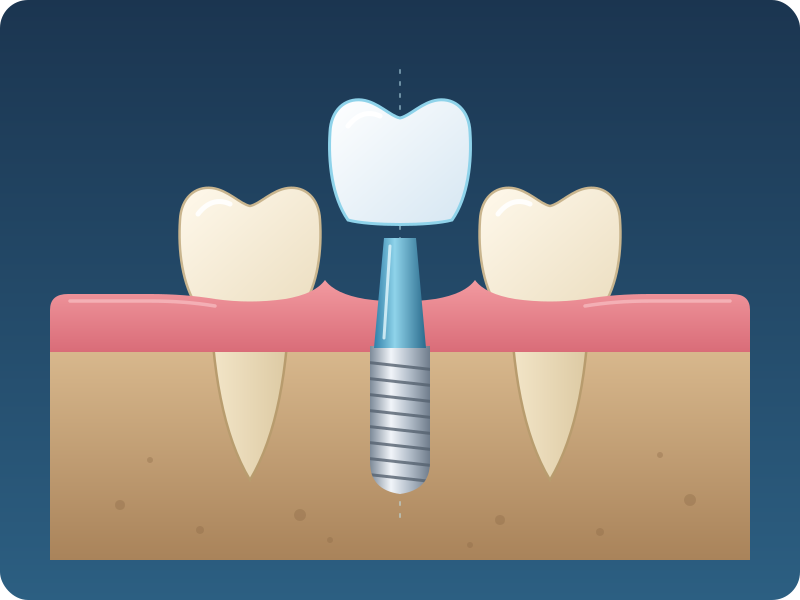
One tooth: dental implant with crown
One implant replaces one missing tooth or molar. The neighbouring teeth do not have to be ground down, as they do with a traditional bridge. Read more on our page about dental implants or in the comparison implant or bridge.
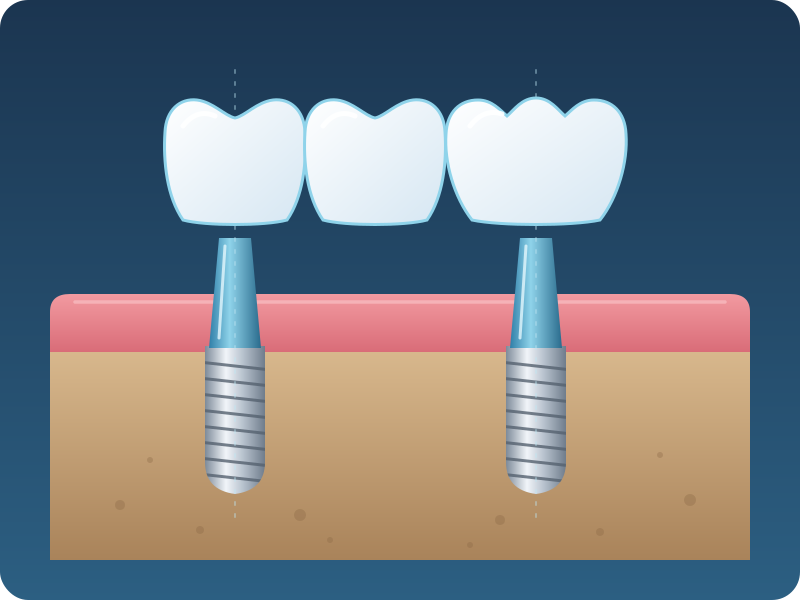
Several teeth: bridge on implants
If you are missing several teeth next to each other, you do not need an implant for every tooth. A bridge on implants is carried by two or more implants and replaces several teeth or molars at once. Here too, your own neighbouring teeth stay untouched.
A denture that will not stay put: overdenture (clip-on denture)
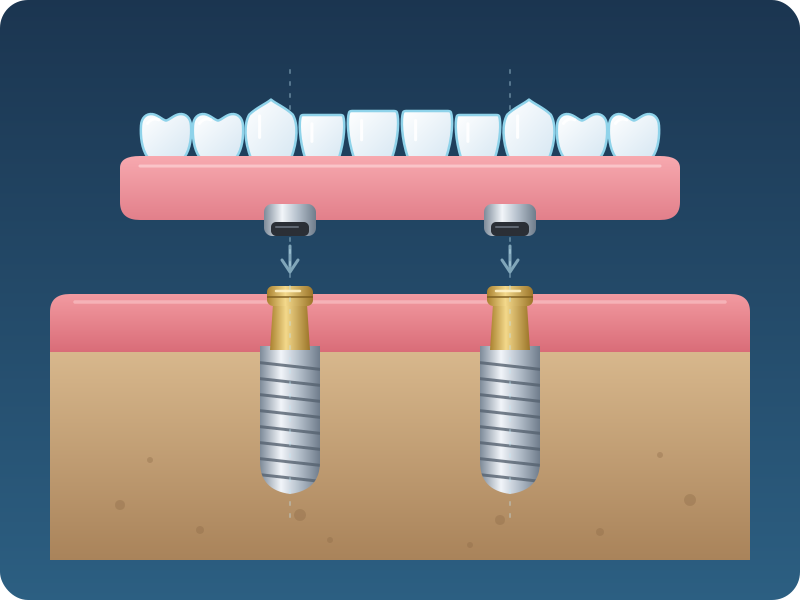
An overdenture clicks onto a limited number of implants, often two to four. You can take it out yourself to clean it. It fits more firmly than an ordinary denture and is usually more affordable than a fixed solution. Read more at overdenture and in the article implant-retained dentures.
Reimbursement from basic health insurance. If you have no teeth at all and a regular denture does not stay in place well, for example because the jaw bone has shrunk a lot or has an unfavourable shape, basic health insurance can cover the implants for an implant-retained denture. This usually means two implants in the lower jaw and four in the upper jaw, for a denture on ball attachments or on a bar, depending on your situation. Prior approval (authorisation) from your health insurer is usually required, and we request it with you. An own contribution applies to the denture, and the care falls under your deductible. The exact conditions differ per insurer and policy. During the consultation we discuss whether you qualify.
A whole jaw: All-on-4 and All-on-6
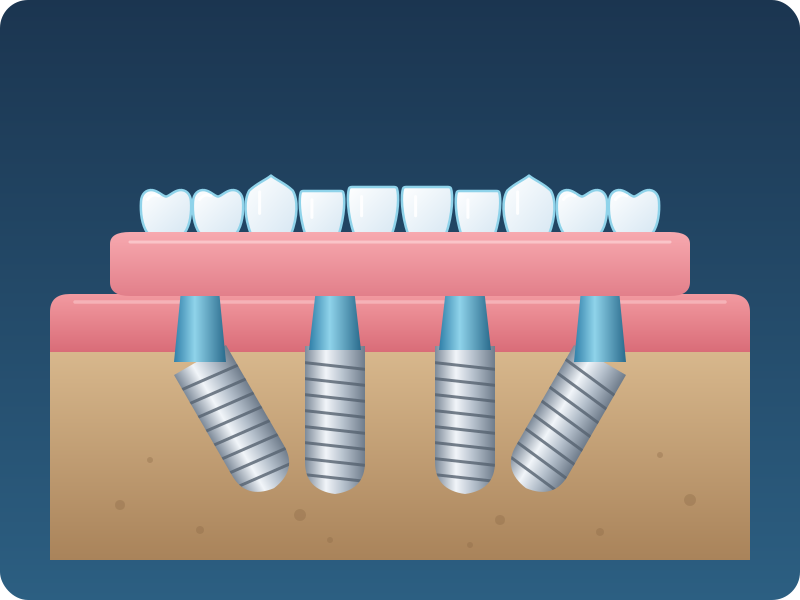
With All-on-4 or All-on-6 a complete arch of teeth is fixed on four or six implants. The number depends on your jaw bone and your bite. Sometimes implants are placed at an angle to make the best use of the available bone. You then no longer wear a removable denture but fixed teeth. Everything about this treatment is on the All-on-X page.
| Solution | Fixed or removable | Number of implants (indicative) | Often suits |
|---|---|---|---|
| Implant with crown | Fixed | 1 | One missing tooth or molar |
| Bridge on implants | Fixed | 2 or more | Several missing teeth next to each other |
| Overdenture | Removable | 2 to 4 | A denture that is loose |
| All-on-4 / All-on-6 | Fixed | 4 or 6 | A whole jaw without (good) teeth |
This is a general overview. What is possible for you is decided by the examination.
Why digital planning makes the difference for implants
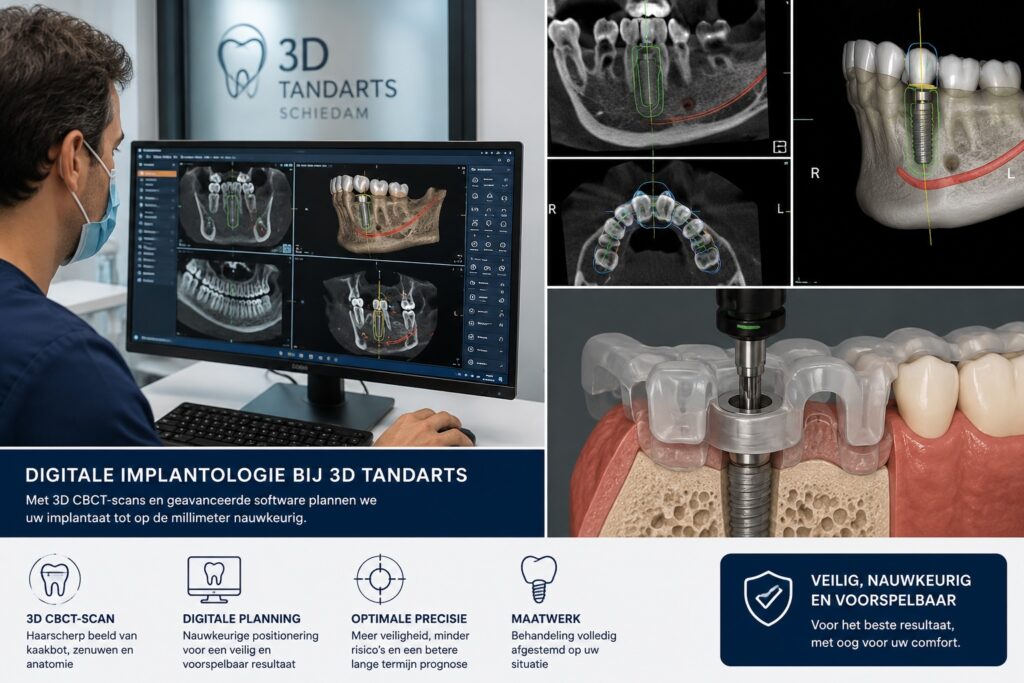
Modern implant dentistry starts on the computer. At 3D Tandarts we work digitally, so you can see in advance what is going to happen.
- CBCT scan (3D X-ray). It shows how high and wide the jaw bone is and where important structures lie, such as the nerve in the lower jaw and the sinus in the upper jaw. This lets us plan an implant so that it avoids these structures. You can read more about the scan at CBCT.
- Intraoral scan. A scan of your teeth with a small camera, without trays of impression material. We use it to design the teeth digitally.
- Planning from the teeth. We first decide where the teeth should go and then plan the implants. The implants then sit under the teeth you need, instead of the teeth having to adapt to wherever the bone happens to have room. This matters most for a good-looking result that is easy to keep clean.
- Surgical guide. Where possible, we use a surgical guide that gives the drill its planned direction during the procedure. This is called guided implant surgery.
Digital planning does not make a treatment risk-free, but it gives us more information and more control in advance. That helps with a predictable result and a clear treatment plan with costs, so you are not faced with surprises afterwards.
Why is planning extra important for All-on-4, All-on-6 and overdentures?
The more teeth a solution replaces, the more important the planning is. For a whole jaw everything has to fit: the number of implants, the distance and angle between them, the bite and the look of the new teeth.
- Choosing between four, six or an overdenture. On the CBCT scan we assess the amount and quality of the bone. This lets us discuss with you whether All-on-4, All-on-6 or an overdenture suits you best.
- Fewer unexpected situations during the procedure. Because the position is set in advance, we know what we are working with.
- The teeth and the implants fit together. The bridge or overdenture is designed while the implants are being planned.
- Sometimes teeth sooner. In some cases, when the situation allows, a temporary restoration can be placed right after the procedure. We assess this for each patient.
Overdenture or All-on-X: how do you choose?
Both solutions use implants, but they feel different.
- Overdenture: removable, often fewer implants, easier to clean and usually more affordable.
- All-on-X: fixed, feels more like your own teeth, needs careful cleaning around the implants and usually costs more.
There is no single best choice. It depends on your jaw bone, your wishes, your budget and how well you can look after the teeth. The dentist will discuss both options with you, including the option of (not yet) doing anything.
What can you expect from a first consultation?
- Introduction and concerns. What are you missing, what are you looking for and what is your medical background?
- Examination. A check of gums, jaw bone and bite, with CBCT and an intraoral scan if needed.
- Explanation and choices. We show you the images and discuss the possible solutions, including the alternatives.
- Treatment plan with costs. You receive a clear plan, so you can decide in your own time.
The consultation is without obligation. You decide whether and when to continue.
What does an implant cost?
For one tooth with a crown, our offer of € 1,900 applies at the moment (view the offer). For a whole jaw with All-on-X we charge from € 8,500 per jaw, depending on the number of implants, the material and any preparatory treatment. What your treatment costs depends on your situation. You can read how we arrive at a price in what does an implant cost in Rotterdam?.
Easy to reach from Rotterdam, Vlaardingen, Delft and Maassluis
An implant treatment involves several appointments. That is easier when the practice is easy to reach. From Rotterdam Centraal it takes 7 minutes by train, from Vlaardingen also 7 minutes, from Delft Campus 13 minutes and from Maassluis 20 minutes. On Wednesdays we are open until 20:00. We help you in Dutch, English or Italian.
Also read “When is a dental implant needed?” and “Best dental implant: which one to choose?“.
Frequently asked questions
Frequently asked questions about an implant dentist near Rotterdam
What is the difference between a dentist and an implant dentist?
An implant dentist is a dentist who focuses on placing implants and restoring tooth loss. At 3D Tandarts your dentist plans and guides the whole treatment, from examination to the final teeth.
Is a CBCT scan always needed?
Not for every patient, but for implants a 3D scan is often valuable to assess the jaw bone and important structures. The dentist will advise what is needed in your situation.
How many implants do I need for a whole jaw?
That depends on your jaw bone, your bite and the chosen solution. Often it is four implants (All-on-4) or six (All-on-6) for fixed teeth, and two to four for an overdenture. After the examination we know what suits you.
Can an overdenture later be replaced with fixed teeth?
In some cases existing implants can be reused or added to. This depends on their number, position and the state of the bone, and is assessed during a consultation.
Can I be helped in English?
Yes. You can see us at 3D Tandarts in Dutch, English and Italian.

Author of this article. BIG registration: see the Team page.
Knowledge base
Latest articles

Hidden root canals: why a tooth can keep causing problems after root canal treatment
Pain after root canal treatment? Learn how a hidden or missed canal happens and how the microscope and CBCT help. Book an assessment in Schiedam.

Surgical microscope for root canal treatment in Schiedam
What does a surgical microscope do in root canal treatment? See how precision and CBCT help save your tooth. Book at 3D Tandarts in Schiedam.
Implant consultation in Schiedam: find out which treatment suits you
Is a dental implant right for you? Find out what an implant consultation in Schiedam involves: examination, advice and a treatment plan. Book today.
Questions about your situation?
During a consultation we look at your situation and discuss the options.