General dentistry
Dental fillings in Schiedam: white, durable, and natural
Do you have a cavity, has a piece of a tooth broken off, or does an old filling no longer fit properly? We first investigate exactly what is going on. Then we discuss whether a filling is the best solution. Our goal is a durable and natural restoration, where possible in a single appointment, directly at Schiedam Centrum station.
When is a filling necessary?
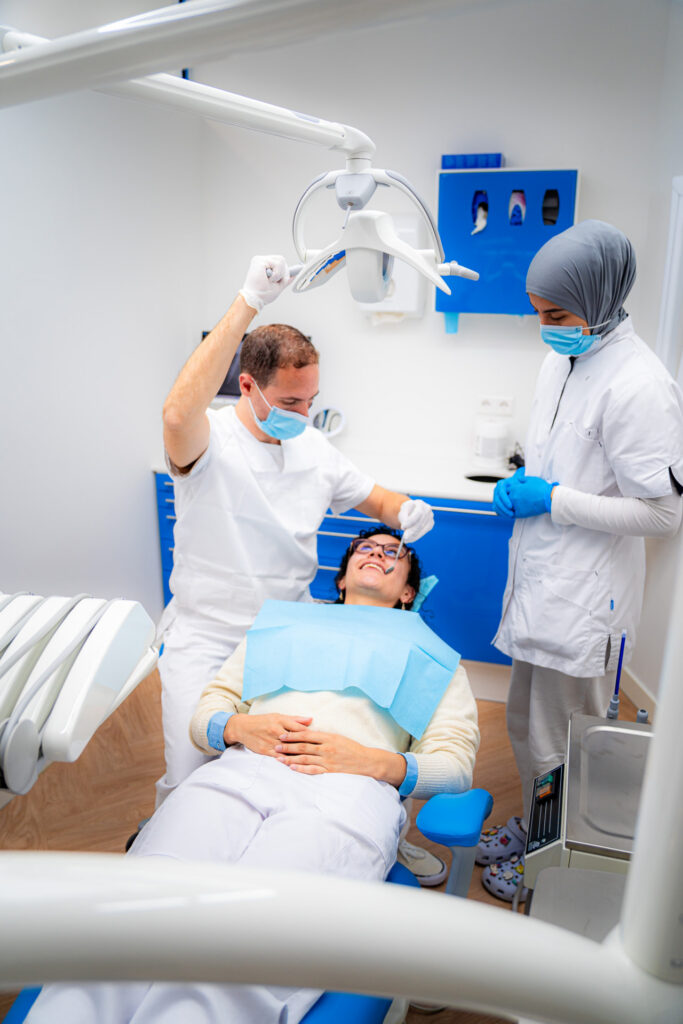
For tooth decay (caries), a damaged tooth, or an old filling that no longer functions properly. A small cavity is usually easy to repair. If you wait too long, the cavity can become larger, the tooth can break, or the nerve can become inflamed. In that case, a root canal treatment or even tooth extraction may be necessary.
Our filling procedure in Schiedam
- Examination: we look at the tooth and take an X-ray if necessary.
- Anaesthesia: if needed, we numb the area locally so you do not feel sharp pain. You may feel pressure or vibration.
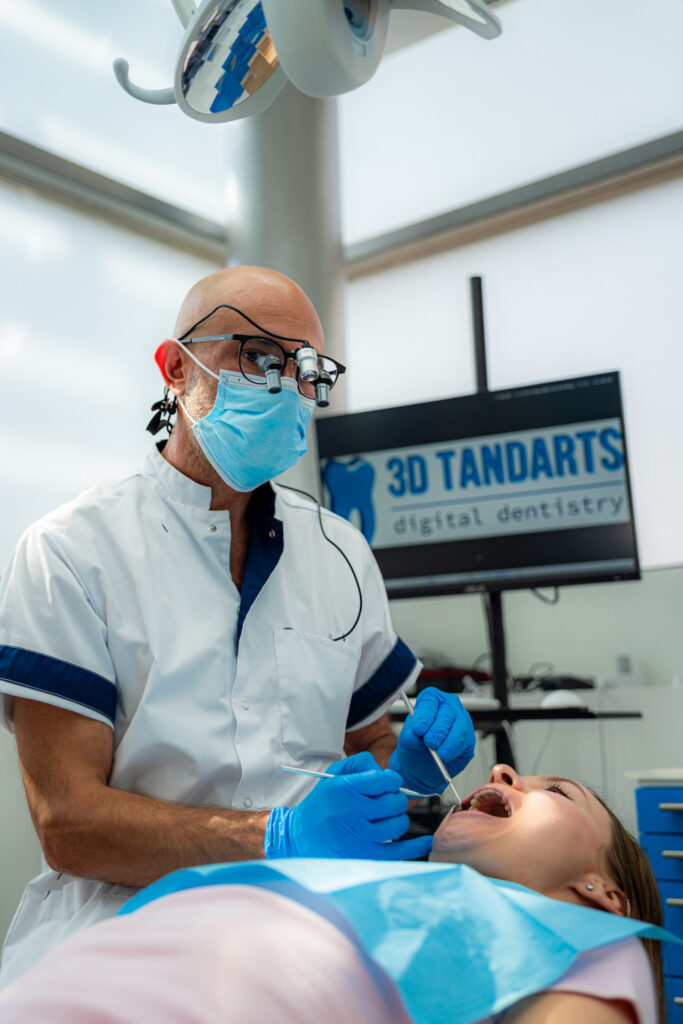
- Rubber dam: for fillings, we preferably work with a rubber dam, a rubber sheet around the tooth. This keeps the tooth dry and clean, allows the filling to adhere better, and is more comfortable and safe (nothing goes into your throat).
- Composite: a white, metal-free filling with a natural colour and shine, also suitable for molars.
- Check of shape and bite: after placement, we check if everything feels right.
When cleaning the cavity, the gum can sometimes bleed. If necessary, we limit that with the laser.
Filling, onlay or crown?
We usually restore small to medium cavities with a filling, often in one appointment. With a very large filling, the tooth can become weaker and break faster. In that case, an onlay or crown can be more durable. The dentist will explain which solution is suitable for you.
What does a filling cost?
A filling usually costs between €100 and €200. For adults, fillings are only reimbursed through a supplementary dental insurance. For children and youths under 18 years, fillings are in principle reimbursed through the basic insurance (with a Dutch basic insurance and BSN). Upon request, you will receive a cost estimate in advance.
Carefully assessed
Targeted restoration
The dentist examines the tooth and explains why a restoration may be needed. The choice of material and approach depends on the location, the size and your personal oral situation.
Our approach
Attention to form and function
The filling is built up carefully and adapted to your teeth. After placement the dentist checks the shape and your bite, and you receive an explanation of the next steps.
What matters
- Examination of the tooth
- Choice of material tailored to your situation
- Check of form and function
Frequently asked questions
Want to know more about fillings?
How long does a filling last?
That varies. It depends on the size, the location, your oral care, your eating habits, and whether you grind your teeth. Small, well-maintained fillings can often last many years. During check-ups, we look at the condition of your fillings.
Does a filling hurt?
The dentist discusses beforehand whether anaesthesia is needed. With an infected tooth, the anaesthesia sometimes works less effectively. We work calmly and step by step.
Is a filling always the best solution?
No. With larger damage an onlay or crown may be more suitable. After an examination the dentist advises what is most appropriate in your situation.
What happens if I postpone a filling?
A small cavity is usually easy to repair. Later it can become larger, making the treatment more extensive.
Why do you use a rubber dam?
For a dry and clean working area, better bonding of the filling and more comfort. It also protects the mouth and throat from fluids and small particles.

Discuss your situation
Request an appointment. The dentist will assess which care suits your situation.