
General dentistry
Tooth extraction in Schiedam, including wisdom teeth
Does a tooth need to be extracted? That often sounds more daunting than it is. At 3D Tandarts, we extract teeth, including complex cases and wisdom teeth, under local anesthesia and with a calm, personal approach. In complex situations, we make a CBCT scan (3D X-ray) for an accurate plan. Directly at Schiedam Centrum station.
Request appointment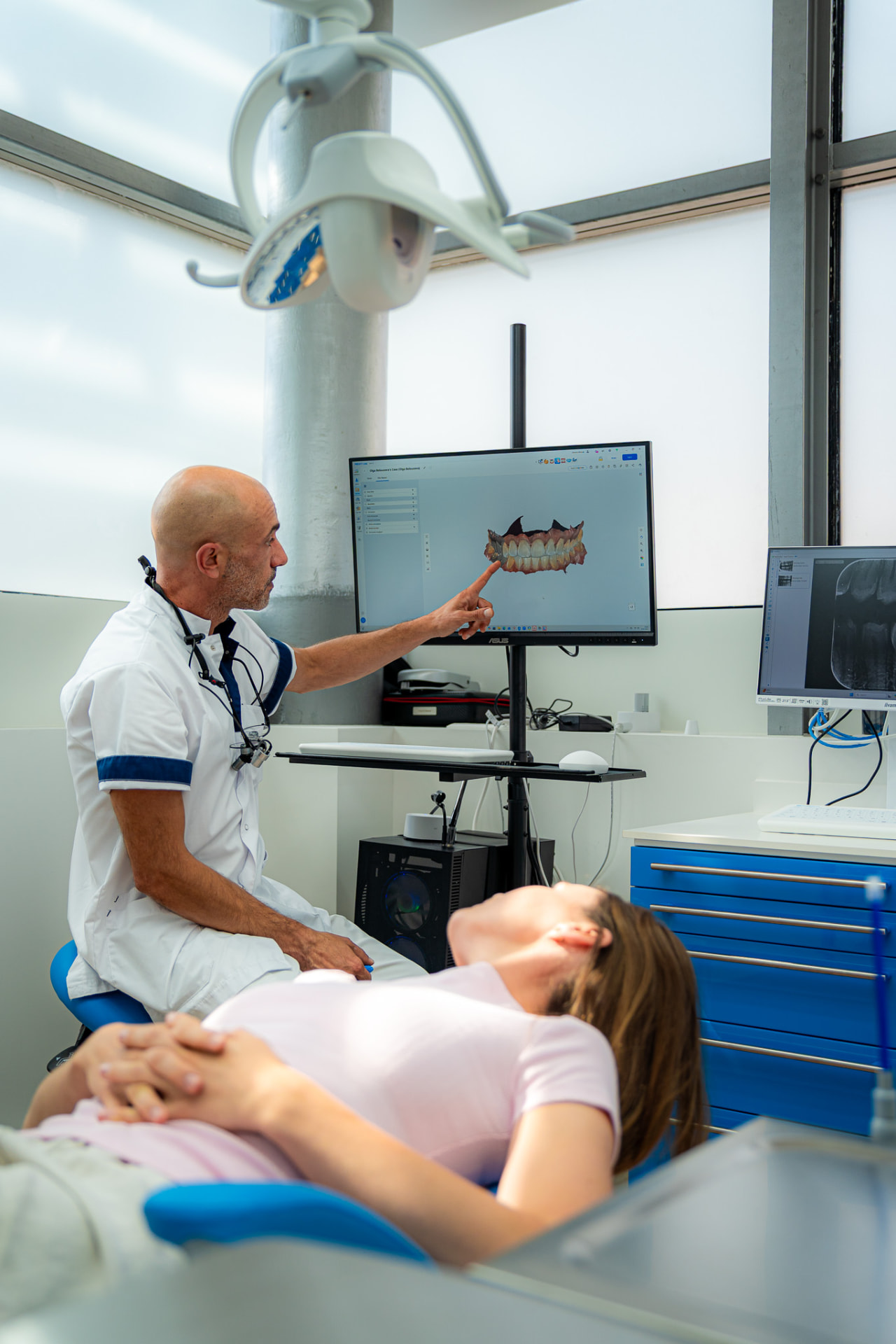
When is extraction necessary?
We always try to preserve teeth first. Sometimes extraction is still the best or only solution, for example in cases of:
- a deep cavity that can no longer be restored
- a tooth that has broken off below the gum line
- a severe infection at the root tip that cannot be properly treated
- a tooth that is loose due to advanced gum disease
- a tooth that is in the way of orthodontic treatment
We always first discuss the alternatives, such as a root canal treatment.
How does extraction proceed?
- Examination and X-ray: we examine the tooth and take one or more X-rays. If the extraction is complex or the tooth is close to an important nerve, a CBCT scan may follow.
- Anesthesia: we give local anesthesia and check whether the tooth is properly numb.
- Extraction: the tooth is loosened and removed. For a deeply broken or impacted tooth, we sometimes make a small opening in the gum, remove a bit of bone, or take the tooth out in pieces.
- Wound care: you will receive a gauze, dissolvable sutures if needed, and verbal and written aftercare instructions.
Aftercare following extraction
- Bite firmly on the gauze for 30 to 60 minutes.
- Do not rinse, smoke, or drink alcohol on the first day.
- If necessary, hold a cold pack (in a cloth) against your cheek.
- Eat soft and lukewarm food and chew on the other side.
- Take painkillers in consultation with the dentist, taking into account your health and medications.
Contact us immediately if you experience increasing pain after a few days, heavy bleeding, fever, a swollen warm cheek, or if you can hardly open your mouth.
Having a wisdom tooth removed
Wisdom teeth usually come in between the ages of 17 and 25. Often there is not enough space, causing them to grow crookedly or not fully emerge. This can lead to pain and swelling, an inflammation of the gum around the tooth, cavities, or damage to the adjacent tooth. We do not extract wisdom teeth just like that, but first discuss whether it is necessary: for example, in the case of recurring infections, a deep cavity, pressure on the adjacent tooth, an infection at the root tip, or on the advice of an orthodontist.
Most wisdom teeth can be extracted in our own practice. Only in very exceptional situations or in the case of increased medical risk do we refer you to an oral surgeon. We also discuss whether it is advisable to extract one or more wisdom teeth at the same time.
What happens after the extraction?
Extraction is often a first step. After that, we discuss how chewing function and appearance can be restored: with an implant, a bridge, or a (partial) denture.
What does it cost to have a tooth extracted?
The rates are set nationally by the NZa. A simple extraction usually costs, including consultation, anesthesia, and X-rays, between approximately €100 and €250. For the extraction of a wisdom tooth, the total costs are usually between approximately €200 and €500, depending on the difficulty and the number. If a CBCT scan is needed, an additional €255.06 is added. You will receive a clear cost estimate in advance.
Carefully assessed
Personal assessment
The dentist assesses your oral health and discusses your wishes, possibilities and alternatives before recommending tooth extraction.
Our approach
A clear process
Digital diagnostics and modern techniques are used where appropriate. We explain each step before you make a decision together with the dentist.
What matters
Careful examination before treatment
Clear explanation of options and alternatives
Planning tailored to your personal situation
Frequently asked questions
Tooth extraction
Does extraction hurt?
We work with local anesthesia and first check if the tooth is properly numbed. You will feel pressure or movement, but no sharp pain. If you do feel something, we will give extra anesthesia. With an infected tooth, the anesthesia sometimes works less effectively. We discuss this step by step with you.
How long will I experience discomfort after the extraction?
A few days of pain and swelling is normal. The gums and bone need a few weeks to heal.
When can I work or play sports again?
After a simple extraction, usually after 1 to 2 days. After a more difficult (surgical) extraction, we recommend 2 to 3 days of rest.
What can I eat and drink?
Wait until the anesthesia has worn off and then choose soft, lukewarm food. Avoid hot drinks, alcohol, smoking, and hard or sharp foods.
Does a removed tooth always need to be replaced?
That depends on the location of the missing tooth and your individual situation. We will discuss the options with you.
When is a CBCT scan necessary?
Especially in complex situations, such as a wisdom tooth close to the nerve or roots whose position is unclear.
Discuss your situation
Request an appointment. The dentist will assess which care suits your situation.