
Modern implant dentistry, comfort and digital precision in Rotterdam and Schiedam
Written by: Danilo Di Vico | General Dentistry, Digital Implant Dentistry and Implant Diagnostics at 3D Tandarts Schiedam
Last updated: 27 September 2026
Placing a dental implant is a surgical procedure. To many people that sounds daunting, but in practice it is often much easier than expected. Thanks to effective local anaesthetic, careful preparation and modern techniques, most patients feel little to no pain during the procedure, and recovery is predictable.
For many patients, the most nerve-wracking part of implant dentistry is not the treatment itself, but the uncertainty beforehand.
Will implant treatment hurt?
What does having an implant placed really feel like?
How long does recovery take?
And what if complications arise?
We hear these questions, especially the first one, almost every day during consultations, and the answer is: no, placing an implant is usually not painful. The treatment is carried out under local anaesthetic, so patients mainly feel pressure but usually no sharp pain.
Many people still expect a heavy or painful surgical procedure, whereas modern digital implant dentistry is often far more controlled, precise and comfortable than it used to be.
Thanks to local anaesthetic, digital planning and modern minimally invasive techniques, most patients experience little to no pain during treatment.
For many patients from Rotterdam, Schiedam and the rest of South Holland, the tension beforehand turns out to be greater than the treatment itself.
In modern implant dentistry, then, it is no longer only about replacing a missing tooth, but also about:
- comfort
- safety
- predictability
- control
- precise digital planning
- long-term oral health
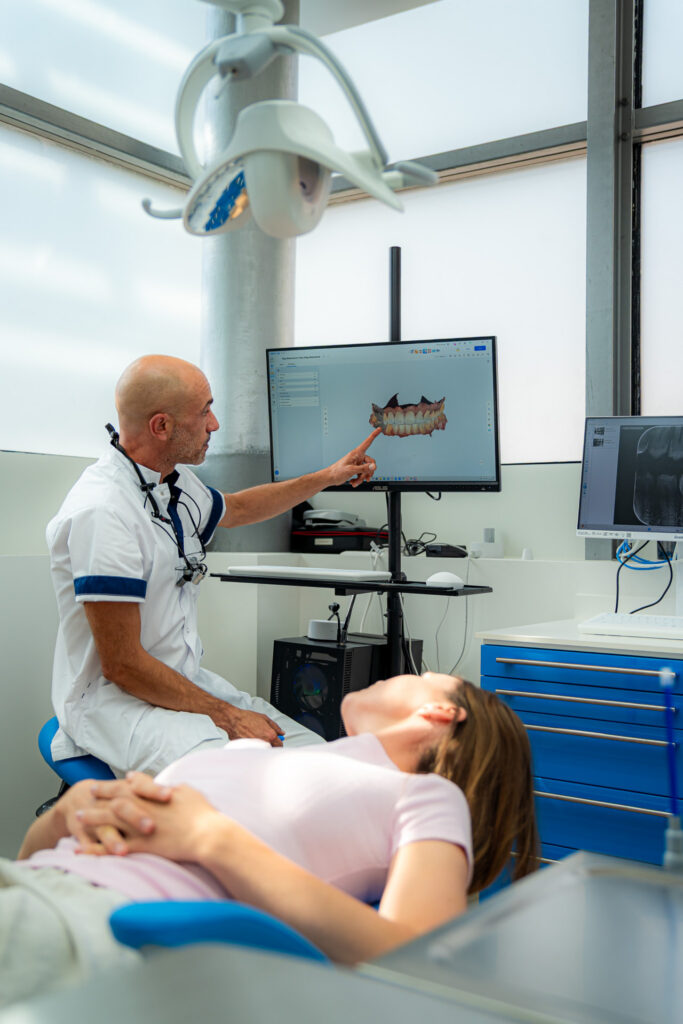
At 3D Tandarts, every implant treatment is prepared digitally in advance, using CBCT 3D diagnostics and precise implant planning based on each patient’s individual anatomy.
This helps our implant dentists prepare the treatment carefully and carry it out in a controlled way, with attention to patient comfort and long-term stability.
Contents
- Does a dental implant hurt during the treatment?
- Why is modern implant dentistry more comfortable today?
- How does recovery after an implant feel?
- What is guided implant surgery?
- What if you are afraid of implant treatment?
- Which factors influence recovery?
- What is peri-implantitis?
- Why aftercare remains important
- Frequently asked questions about pain with dental implants
Does a dental implant hurt during the treatment?
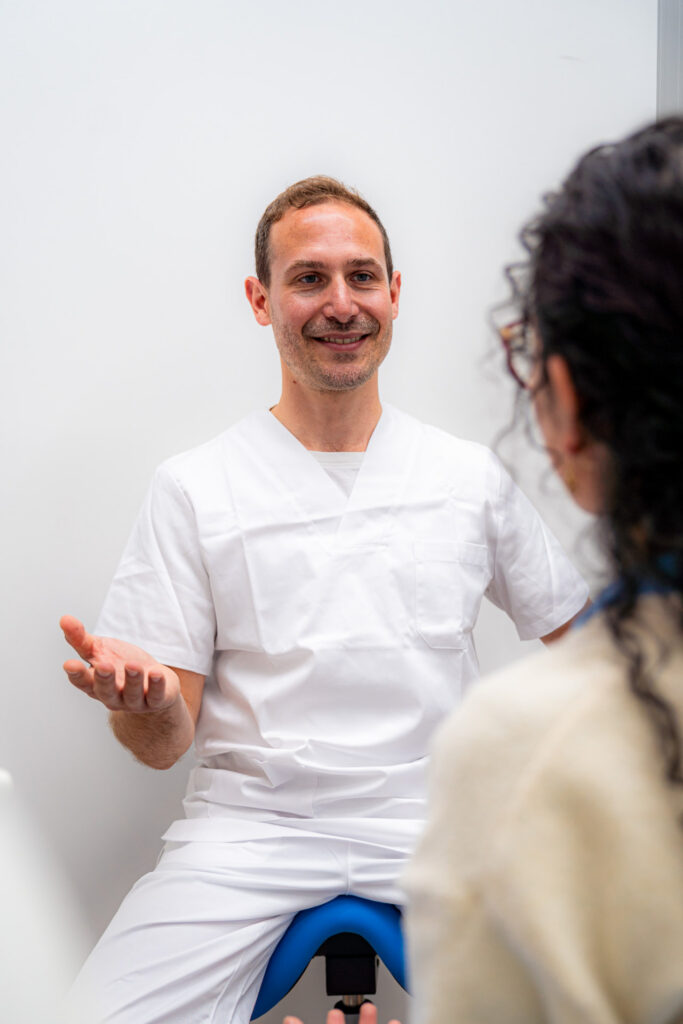
During the treatment itself, most patients experience little to no pain.
An implant is placed under local anaesthetic, similar to many other dental treatments.
You may still feel some light pressure, movement or vibration, but real pain is usually minimal.
Many patients are surprised afterwards at how calm and controlled the treatment turned out to be.
Patients who felt a lot of tension beforehand in particular often say afterwards that the treatment was less taxing than they had expected.
How comfortable implant treatment feels naturally depends on several factors, including:
- the complexity of the treatment
- the amount of jawbone available
- any infection beforehand
- individual sensitivity
- tension or anxiety
- the implant technique used
Thanks to modern digital implant dentistry, treatments can now be planned far more precisely than in the past, which often contributes considerably to comfort and predictability.
Why is modern implant dentistry more comfortable today?
Implant dentistry has evolved considerably in recent years.
Where work used to rely more often on two-dimensional imaging and manual estimation, digital workflows and three-dimensional analysis are used more and more today.
As a result, implant treatments can often be:
- planned more precisely
- carried out in a less invasive way
- better adapted to the individual anatomy
- more predictable
- better at protecting the surrounding structures
In modern implant dentistry, preparation therefore plays a central role.
Before treatment, we carefully assess:
- how much bone is available
- where important nerves run
- which implant position supports the most stable result
- how chewing forces are distributed
- which approach is the most comfortable and predictable
This digital preparation helps to assess risks better and to carry out treatments in a more controlled way.
For many patients, this brings more calm, clarity and confidence beforehand.
The role of CBCT 3D diagnostics
CBCT 3D diagnostics are often used for modern implant treatments.
With this three-dimensional imaging, important anatomical structures can be analysed very precisely, including:
- jawbone volume
- bone density
- nerve pathways
- position of the sinus
- available space
- functional load on the teeth
This digital analysis makes it possible to position implants more precisely and to assess potential risks better in advance.
For many patients, this preparation gives a greater sense of control before the treatment starts.
It is precisely this predictability that makes such a big difference in modern implant dentistry today.
Guided implant surgery and minimally invasive techniques
With guided implant surgery, the exact position of the implant is determined digitally in advance.
Based on this planning, a surgical guide can be made that helps to position the implant very accurately.
Possible advantages include:
- higher precision
- minimal strain on the surrounding tissues
- more efficient treatment
- more predictable recovery
- support for long-term stability
Because the surrounding structures can be respected more precisely, some patients report less swelling and a more comfortable recovery.
For many patients, this predictability plays an important part in reducing uncertainty beforehand.
How does recovery after an implant feel?
After straightforward implant treatments, many patients can often return to their daily activities quickly. After more extensive procedures, such as bone grafting or a sinus lift, recovery can bring temporary extra tenderness or swelling. That is why every situation is assessed individually and planned digitally.
After the treatment, temporary tenderness or post-operative pain may occur. Most patients describe recovery as soreness, pressure or tenderness rather than severe pain. Even so, every situation remains individual.
After a straightforward implant placement, post-operative pain often stays limited, and any swelling or tenderness usually fades gradually within a few days. More extensive treatments, such as bone grafting or a sinus lift, can temporarily cause more swelling, post-operative pain or a longer recovery period.
Most patients can resume their daily activities relatively quickly, but sufficient rest and good aftercare remain important for a predictable recovery.
How recovery is experienced depends, among other things, on:
Possible temporary symptoms are:
- slight swelling
- tender gums
- temporary post-operative pain
- pressure when chewing
- slight bluish discolouration
These symptoms usually fade gradually during the first few days after the treatment.
How recovery is experienced differs from patient to patient and depends, among other things, on:
- the extent of the treatment
- the quality of the jawbone
- individual healing
- good oral hygiene
- smoking habits
- any bone grafting
Many patients can resume their daily activities relatively quickly.
Patients who were afraid of severe pain beforehand are often surprised at how limited the post-operative pain turns out to be.
How does pain develop after an implant, day by day?
Every patient recovers at their own pace. How much post-operative pain or swelling you experience depends, among other things, on the extent of the treatment, the quality of your jawbone, your general health and how your body responds to the procedure. Most people experience only mild to moderate post-operative pain, which can be kept well under control with ordinary painkillers.
The timeline below gives a general picture of how recovery after placing a dental implant usually goes. It is an average; your personal situation may differ. Are you unsure about your recovery, or are the symptoms getting worse? Then always contact your dentist.
- When: Day 0; What can you expect? The anaesthetic is still working.
- When: Day 1; What can you expect? Mild post-operative pain and swelling are normal.
- When: Day 2–3; What can you expect? Often the most tender period.
- When: Day 4–7; What can you expect? Clear improvement.
- When: After 1 week; What can you expect? Usually hardly any pain left.
- When: After 2 weeks; What can you expect? Healing generally progresses calmly.
What happens with bone grafting?
Sometimes there is not enough jawbone to place an implant stably.
In that case, bone grafting may be necessary.
For some patients this sounds daunting, but these treatments, too, are now prepared digitally and planned with care.
Thanks to modern techniques, precise analysis and controlled planning, bone grafting procedures today are often more predictable than in the past.
With CBCT 3D diagnostics, we can assess in advance with precision:
- how much bone is present
- which structures need to be protected
- which treatment is technically the most suitable
- which expectations are realistic
For many patients, it is precisely this clear preparation that gives more confidence before the treatment.
Afraid of the dentist and of implant treatment?
Many patients considering implants are worried not only about pain, but also about losing control or about negative previous experiences at the dentist.
Some patients even put off a consultation for years because they are afraid of complications or pain, or because of the cost of implants.
That is why communication plays an important role in modern implant dentistry.
A clear explanation beforehand often helps to bring more calm and confidence.
For many patients, the first step is the hardest. Once it becomes visible how the treatment is planned digitally and which steps will be followed, a better overview and more predictability usually follow.
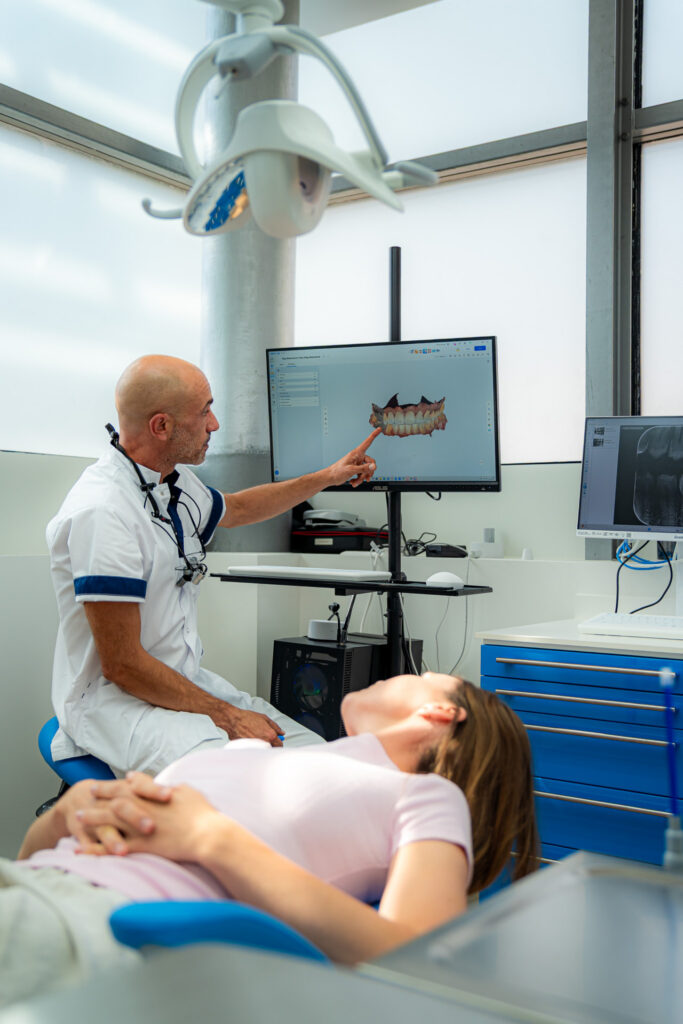
Digital treatment planning makes it possible to show clearly in advance:
- where the implant will be placed
- what the anatomical situation looks like
- which structures need to be protected
- which expectations are realistic
In modern implant dentistry, patient comfort is therefore not only about anaesthetic, but also about trust, guidance and control.
Which factors influence recovery?
Recovery after implant treatment is influenced by several biological and personal factors.
Oral hygiene
Good oral hygiene supports healthy wound healing and reduces the risk of inflammation around implants.
Smoking
Smoking increases the risk of delayed healing and peri-implantitis.
Teeth grinding (bruxism)
Excessive chewing forces can put extra load on implants and the surrounding structures.
General health
General health, medication use and certain medical factors can also influence wound healing and bone stability.
What is peri-implantitis?
Peri-implantitis is an inflammation around an implant in which the gum and jawbone can become damaged.
Although implants generally have a high success rate, long-term follow-up remains important.
Risk factors include:
- insufficient oral hygiene
- smoking
- overloading
- insufficient professional check-ups
- certain medical factors
Regular check-ups help to detect possible complications at an early stage.
Aftercare is therefore an essential part of successful implant dentistry.
Why aftercare remains important
An implant treatment does not end at the moment the implant is placed.
Long-term stability also depends on professional follow-up and on how easy the implant is to keep clean.
During check-ups, we look at things such as:
- gum health
- implant stability
- bone support
- ease of cleaning
- wear of crowns or bridges
Preventive follow-up helps to keep implants healthy and stable in the long term.
Why do patients from Rotterdam and South Holland choose digital implant dentistry?
More and more patients from:
- Rotterdam
- Schiedam
- Delft
- The Hague
- Vlaardingen
- Leiden
now consciously choose modern digital implant dentistry because of:
- precise 3D diagnostics
- guided implant surgery
- a focus on precision
- predictable treatment planning
- minimally invasive techniques
- long-term stability
Many patients especially value the combination of technology, clear explanation and personal guidance throughout the entire treatment process.
Easy to reach from Rotterdam and the surrounding area
The 3D Tandarts practice is located right inside Schiedam Centrum station and is easy to reach from:
- Rotterdam
- Delft
- The Hague
- Leiden
- Vlaardingen
- Utrecht
For implant treatments involving several appointments, accessibility is often an important practical advantage.
Frequently asked questions
Frequently asked questions about pain with dental implants
Does a dental implant hurt during the treatment?
Most patients experience little to no pain during the treatment thanks to local anaesthetic.
How long does the post-operative pain last?
Mild post-operative pain or tenderness can last a few days, depending on the extent of the treatment.
Is an implant more painful than having a tooth extracted?
Many patients find implant treatment less taxing afterwards than they expected beforehand.
Does guided surgery affect comfort?
Digital planning and guided surgery can contribute to greater precision and a more predictable recovery.
What if I am afraid of implant treatment?
Clear explanation, digital planning and calm guidance often help to reduce uncertainty.
Other frequently asked questions
When should I get in touch after a treatment?
If you have persistent severe pain, swelling or unexpected symptoms, a check-up is important.
How many days of pain after an implant?
After a dental implant is placed, it is normal to experience mild to moderate pain or tenderness for a few days. Most patients mainly have swelling, a feeling of pressure or post-operative pain during the first 2 to 5 days. The pain often fades gradually after 48 hours.
With painkillers such as paracetamol or ibuprofen, the symptoms can usually be kept well under control. If the pain gets worse after a week or comes with severe swelling or fever, it is important to contact your dentist.
Can you work after an implant?
In many cases you can go back to work the day after the implant is placed. This depends on the nature of the treatment and the kind of work you do.
After a straightforward implant placement, most patients soon feel well enough for daily activities. If you have physically demanding work or have had extensive surgery, it may be wise to take 1 to 2 days of rest.
It is advisable to avoid strenuous exercise, sport and lifting during the first few days, to prevent bleeding and extra swelling.
Can you eat after implant placement?
Yes, you can eat after an implant is placed, but it is important to be careful. Wait until the anaesthetic has completely worn off to avoid biting your cheek or lip.
For the first few days, soft food is recommended, such as yoghurt, soup, mashed potato, pasta or smoothies. Avoid hard, hot or spicy foods on the side of the implant.
It is also better to avoid alcohol and smoking for a while, as these can have a negative effect on the healing process.
When is an implant fully healed?
Full healing of an implant takes 3 to 6 months on average. During this period the implant fuses with the jawbone. This process is called osseointegration.
The initial healing of the gum usually takes place within 1 to 2 weeks, but the bone needs more time to recover firmly around the implant.
Only when the implant has fully fused can the final crown, bridge or denture be placed. The exact healing time differs from patient to patient and depends, among other things, on bone quality, general health and oral hygiene.
Personal advice on implant dentistry in Schiedam
Many patients put off implant treatment for a long time out of fear of pain or complications.
A first consultation is therefore often not only about treatment, but above all about clarity, reassurance and insight into what is technically possible today.
With CBCT 3D diagnostics, we can assess in advance with precision:
- what the anatomical situation looks like
- how much bone is present
- which implant position is the most suitable
- which treatment will be the most predictable
- which expectations are realistic
Many patients find that a clear digital analysis in advance brings more control, confidence and calm before the treatment starts.
At 3D Tandarts we combine modern technology, digital precision and personal guidance for patients from all over South Holland.
Conclusion
At 3D Tandarts in Schiedam, we treat patients from Schiedam, Rotterdam and the surrounding area with modern digital implant dentistry. Where clinically appropriate, we use CBCT 3D diagnostics, digital planning and guided surgery to prepare the treatment carefully. This can help the procedure run in a controlled way with as little burden as possible; how you experience the treatment differs from person to person.
For many patients this means not only restored aesthetics and function, but above all more comfort, confidence and long-term oral health.
Are you hesitating about implants because you are afraid of pain, complications or a lengthy recovery? Then a clear digital analysis is often the first step towards more calm and confidence. Book your first consultation here.

Focus areas: Endodontics and Digital Implant Dentistry · BIG registration: 29919697202 · Last updated: 27 September 2026
Knowledge base
Latest articles

Hidden root canals: why a tooth can keep causing problems after root canal treatment
Pain after root canal treatment? Learn how a hidden or missed canal happens and how the microscope and CBCT help. Book an assessment in Schiedam.

Surgical microscope for root canal treatment in Schiedam
What does a surgical microscope do in root canal treatment? See how precision and CBCT help save your tooth. Book at 3D Tandarts in Schiedam.
Implant consultation in Schiedam: find out which treatment suits you
Is a dental implant right for you? Find out what an implant consultation in Schiedam involves: examination, advice and a treatment plan. Book today.
Questions about your situation?
During a consultation we look at your situation and discuss the options.