

Protection against tooth wear, jaw tension and overloading of teeth, crowns and implants.
Written by Danilo Di Vico | General and Digital Dentistry at 3D Tandarts Schiedam.
– Last updated: 23 September 2026
Do you suffer from teeth grinding, jaw clenching, sensitive teeth, headaches when you wake up or visible wear on your teeth? Then a night guard, also called a bite guard, occlusal splint or grinding splint, can help protect your teeth from further damage.
Teeth grinding and jaw clenching are together also known in dentistry as bruxism. Bruxism is an unconscious muscle reaction of the jaw in which the teeth are pressed firmly together (clenching) or moved over each other (grinding). This usually happens without you realising it, and can occur at night during sleep (nocturnal teeth grinding, also called sleep bruxism) as well as during the day, for example during stress, concentration or tension (awake bruxism).
With sleep bruxism you often do not notice it yourself. It is frequently a partner who hears the grinding sound at night, or you recognise it from the consequences: a stiff or painful jaw when you wake up, a headache around the temples, or visible wear on your teeth. Awake bruxism, on the other hand, more often shows up as unconscious clenching during the day, for example at a desk or while driving, without necessarily involving grinding.
The causes of bruxism are not always clear-cut, but tension and stress (teeth grinding due to stress), a disturbed sleep pattern, caffeine or alcohol use, and sometimes an incorrect bite (occlusion) often play a role. Left untreated, bruxism can lead to lasting damage in the long term: worn-down teeth, sensitive teeth due to exposed dentine, cracks or fractures in fillings and crowns, overloading of implants, and even problems with the jaw joint (temporomandibular disorder, TMD).
A bruxism treatment often consists of protecting the teeth, explaining oral habits and monitoring wear.
A night guard is not a standard solution for everyone. It does not always stop the grinding completely, but it can prevent teeth from wearing down further, fillings from breaking, or crowns, veneers and implants from being loaded unnecessarily heavily. The most important question is therefore not only: “Do I need a night guard?” but above all: “What is happening in my mouth, how much risk are my teeth at, and what protection suits my situation?”
At 3D Tandarts in Schiedam, we first carefully assess what is going on. We look at the main factors that affect the health of your teeth and jaw, such as jaw pain, jaw joint problems or other symptoms, but also wear, bite loading, jaw muscles, existing restorations and your daily habits. Sometimes a custom-made occlusal splint is the sensible choice. Sometimes monitoring, explanation, behavioural advice or further assessment is more appropriate. So you do not receive standard advice, but a well-founded assessment.
An appointment for a night guard is therefore not a commitment to treatment. It is a way to get clarity: are you really grinding or clenching, is damage visible, what are the risks if you wait, and which solution makes sense for your teeth? Would you like to know whether a night guard makes sense in your situation? Then book an assessment at 3D Tandarts in Schiedam.

Do you recognise teeth grinding, jaw clenching or wear?
Teeth grinding and jaw clenching are not always noticed straight away. Many people only discover it when their partner hears noise at night, when the dentist sees wear during a check-up, or when symptoms appear such as jaw tension, headaches or sensitive teeth.
It is important to know that you do not have to be in pain to develop damage from grinding or clenching. Wear can develop slowly and go unnoticed for a long time.
Signs that may point to grinding or clenching
Possible signs are:
- flattened, shorter-looking or sharper teeth;
- sensitive teeth;
- small cracks in teeth or fillings;
- chipped pieces of enamel;
- painful or tired jaw muscles;
- headaches, especially when waking up;
- tension around the temples, cheeks or jaws;
- teeth that feel “tight”, sore or overloaded;
- grinding sounds heard by a partner;
- damage to fillings, crowns, veneers, bridges or implant crowns;
- an old night guard that is thin, broken or no longer fits.
These signs do not automatically mean you need a night guard straight away. They are, however, a good reason to have your teeth, wear pattern and bite loading assessed.
Not sure whether your symptoms are caused by grinding or clenching? A wear check at 3D Tandarts in Schiedam can give you clarity.
Symptoms in the morning
With nocturnal teeth grinding, patients often notice symptoms mainly when they wake up. Examples are a tired jaw, stiff chewing muscles, a headache around the temples or the feeling that the teeth have been under pressure.
With jaw clenching during the day, the symptoms are sometimes different. You may notice, for example, that you clench your back teeth together during work, driving, sport, concentration or stressful moments. This often happens unconsciously. A night guard can then offer protection, but awareness of the clenching habit and relaxation of the jaw muscles are often important too.
Wear you do not always notice yourself
Tooth wear usually develops gradually. Because teeth change slowly, you do not always see it yourself. The dentist can recognise wear patterns from flattened chewing surfaces, loss of enamel, cracks, sensitive spots, damaged fillings or changes in the bite.
Pain is therefore not always the first warning sign. Sometimes visible wear or overloading of restorations is reason enough to consider protection, even if you have few symptoms.
When is it wise not to wait?
Have your teeth assessed if you recognise one or more of these situations:
- your teeth seem shorter, flatter or more sensitive;
- you wake up with jaw tension or a headache;
- your partner hears grinding sounds;
- pieces of tooth, filling or crown regularly break off;
- you have veneers, crowns, bridges or implants;
- you already have an old night guard that no longer feels comfortable;
- you are unsure whether an online or off-the-shelf night guard offers enough protection.
An assessment does not mean you automatically have to have a night guard made. Above all, it gives insight into what is going on and which choice is sensible.
What is a night guard or occlusal splint?
A night guard is a custom-made plastic appliance, usually worn at night, to protect the teeth from wear caused by teeth grinding or jaw clenching. The night guard distributes forces better and prevents teeth from rubbing directly against each other.
The main purpose of a night guard is protection. It can limit the consequences of grinding and clenching, but it does not always remove the cause of bruxism.
Night guard, occlusal splint and splint: what is the difference?
Different terms are used:
- Night guard: the everyday term patients use for a guard against teeth grinding.
- Occlusal splint: the dental term for a splint that fits over the teeth and absorbs bite loading.
- Splint: a broader clinical term for an appliance that supports the teeth, bite or jaw function.
- Sleep guard: an informal term, because the guard is usually worn during sleep.
In many cases people mean the same thing: a custom-made splint that protects the teeth from overloading.
What a night guard does do
A well-fitting night guard can:
- protect teeth from further wear;
- reduce direct friction between teeth;
- distribute forces better across the bite;
- help limit damage to fillings, crowns, veneers, bridges or implant crowns;
- relieve sensitive or vulnerable tooth surfaces;
- let the jaw muscles work more calmly in some patients;
- help prevent minor wear from growing into more complex dental problems;
- give insight into how much load is placed on the teeth, for example when the night guard itself shows wear.
For patients with existing restorations, protection can be even more important. Crowns, veneers, bridges and implants are strong, but they are not unlimited in their resistance to long-term grinding or clenching forces.
What a night guard does not always do
A night guard does not stop teeth grinding in everyone. That is a common misunderstanding.
The night guard mainly treats the consequences of grinding and clenching: wear, overloading and damage to the teeth. In some patients muscle complaints, jaw tension or morning headaches also decrease, but this differs from person to person.
When jaw problems have several causes, additional support may be needed. Examples include advice about oral habits, relaxation of the jaw muscles, treatment of a dental problem or referral to a jaw physiotherapist.
A reliable treatment plan therefore does not start with the question: “Which night guard do you want?” but with: “What is causing your symptoms, what needs to be protected and which approach suits your teeth?”

When does a night guard make sense?
A night guard makes sense when there are clear indications that teeth or restorations are being overloaded by grinding or clenching. The decision depends on your symptoms, wear pattern, bite, jaw muscles, existing restorations and risk of further damage.
In practical terms: the clearer the wear or overloading, the more important it becomes to consider protection.
With visible wear
A night guard can be sensible when the dentist sees that teeth are becoming flatter, shorter, sharper or more sensitive due to wear. Wear of tooth enamel does not repair itself. Once enamel becomes thinner, teeth can become more sensitive and the risk of cracks, fractures or more complex restorations can increase.
Patients sometimes say: “But I’m not in pain.” That is understandable, but pain is not always the best measure of damage. A tooth can already be wearing down before you feel any symptoms.
With jaw tension or headaches
Jaw clenching and teeth grinding can put heavy strain on the chewing muscles. This can lead to a tired jaw, pain around the temples, headaches or tension in the face.
An occlusal splint can help some patients distribute the load better. Even so, nuance is important: headaches and jaw pain can have several causes. That is why the dentist assesses not only the teeth, but also when the symptoms occur, the jaw muscles, the jaw joint and the way the teeth come together.
With crowns, veneers, bridges or implants
Do you have crowns, veneers, bridges or implants? Then protection against grinding can be especially valuable. Restorations are made to withstand normal chewing forces, but repeated grinding or clenching can produce very high forces.
A night guard can help protect restorations against:
- chipping of ceramic;
- veneers coming loose or being damaged;
- fracture of fillings;
- overloading of bridges;
- mechanical stress around implant structures;
- accelerated wear of opposing teeth.
This does not mean every patient with a crown automatically needs a night guard. It does mean that grinding and clenching should be taken seriously and assessed when there is a lot of restorative work.
When further examination is needed first
Sometimes a night guard is not the first or only step. Further examination may be needed when:
- jaw pain is severe or persistent;
- mouth opening is limited;
- the jaw joint clicks, locks or is painful;
- the pain does not match the wear pattern;
- teeth are sensitive due to decay, inflammation, receding gums or leaking fillings;
- there is acute toothache, swelling or a fracture;
- you already wear a night guard but symptoms persist;
- your teeth have recently changed significantly due to crowns, implants or extensive restorations.
In such situations it must first become clear where the problem comes from. A night guard can be useful, but must never replace a proper diagnosis.
Decision guide: when to assess, protect or investigate further?
A simple way to understand your situation:
- Situation: You are unsure whether you grind, but there is no clear damage; What is usually sensible? Have it assessed first and monitor
- Situation: There is visible wear or sensitivity; What is usually sensible? Assess whether protection is needed
- Situation: You have crowns, veneers, bridges or implants and grinding symptoms; What is usually sensible? Seriously consider protection
- Situation: You have jaw pain, limited mouth opening or joint problems; What is usually sensible? Carry out a broader examination
- Situation: You have an old or poorly fitting night guard; What is usually sensible? Have the fit and function checked
- Situation: You have acute pain, swelling or a broken tooth; What is usually sensible? Treat the acute problem first
Would you like to know where you fit in this overview? At 3D Tandarts you can first have it assessed whether a night guard makes sense in your situation.
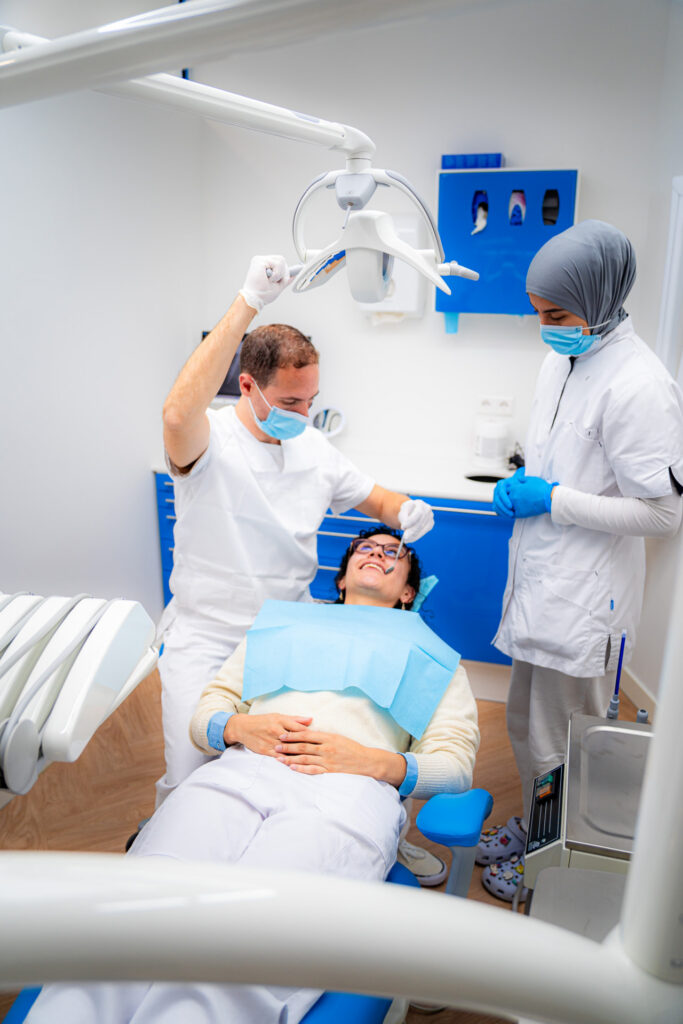
How does the dentist determine whether you need a night guard?
The dentist examines not only whether you grind, but above all what the consequences are for your teeth, bite, jaw muscles and any restorations. A good night guard starts with a good assessment.
Checking wear and cracks
During the examination the dentist looks at:
- wear surfaces on the teeth;
- thinning enamel;
- sensitive areas at the gumline;
- cracks or fissures;
- fracture edges;
- damage to fillings, crowns or veneers;
- wear on opposing teeth;
- signs of overloading around implants or bridges.
Wear patterns tell a lot. They show where teeth touch each other and where forces build up. That helps to determine whether protection is needed and which type of protection is suitable.
Assessment of the bite and jaw muscles
The dentist assesses how the teeth come together. This is also called the occlusion or bite. With grinding and clenching, certain teeth may be loaded more heavily than others.
The jaw muscles and jaw joint can also be included in the assessment. Painful chewing muscles, tension around the temples, a tired jaw or limited mouth opening can indicate that there is more going on than just tooth wear.
Intraoral scan or impression
For a custom-made night guard, an accurate record of your teeth is needed. This can be done with a traditional impression or with an intraoral scan.
At 3D Tandarts we work with modern digital techniques. An intraoral scan can help to record the shape of your teeth accurately. This contributes to a better fit and a more predictable treatment process.
Discussion of symptoms and habits
The dentist also discusses your symptoms and habits. For example:
- Do you mainly have symptoms in the morning?
- Do you clench during the day when concentrating or under stress?
- Does your partner hear grinding sounds?
- Have you had a night guard before?
- Do you still wear the old night guard?
- Have you recently had crowns, veneers, implants or large fillings placed?
- Do you have headaches, neck tension or jaw pain?
- Do you notice sensitive teeth?
- Are you suffering from stress, tension or changes in your sleep?
This information helps to distinguish between nocturnal bruxism, daytime clenching, jaw joint problems and other dental causes.
Why diagnosis matters more than simply making a night guard
A night guard that is technically well made but does not fit the cause or situation can be disappointing. That is why diagnosis is important. The dentist must first determine whether the problem is mainly wear, muscle loading, a jaw joint problem, restoration loading or another dental cause.
That is also the difference between an appliance and a treatment plan. The night guard is the appliance; the assessment determines whether the appliance is the right choice.
Would you mainly like to know what is examined before you decide? Then book an assessment. You will receive an explanation of what is visible, what the risks are and which options make sense.

How is a custom night guard made?
Digital dentistry and modern diagnostics
At 3D Tandarts we use modern digital dentistry to make diagnoses more accurate and treatments more predictable. With intraoral scans, the teeth can be recorded digitally without traditional impression materials. This produces a detailed 3D image of the teeth that can be used for treatment planning, monitoring tooth wear and making custom appliances such as night guards.
Digital techniques help us not only to work more comfortably for the patient, but also to follow changes in the teeth more accurately. This is especially valuable for tooth wear, restorative dentistry and the treatment of patients with teeth grinding or jaw clenching.
But how is a custom night guard made?
A night guard is made step by step. The aim is not only for the guard to fit, but also to be comfortable to wear and to protect your teeth effectively.
Step 1: examination and advice
First, the dentist assesses your teeth, wear, bite and symptoms. Then we discuss whether a night guard makes sense and which type of protection suits your situation best.
Step 2: scan or impression
Next, your teeth are recorded with a digital scan or a traditional impression. This is the basis for the night guard. The more accurate this record, the better the guard can be adapted to your teeth.
Step 3: bite registration
Sometimes a bite registration is needed. This records how the upper and lower jaw are positioned in relation to each other. This is important because a night guard must not only fit, but also work properly when the jaws close.
Step 4: fabrication
The night guard is custom-made in a dental laboratory. Depending on the situation, a certain material, thickness and design is chosen for the upper or lower jaw. This choice depends on your bite, degree of wear, comfort and the clinical indication.
Step 5: fitting and checking
At the fitting, the dentist checks whether the night guard fits well, stays securely in place and does not press anywhere uncomfortably. We also look at how the teeth close on the guard. If necessary, small adjustments are made to optimise comfort and function.
Step 6: aftercare and adjustment
In practice, a night guard sometimes needs to be adjusted. That is normal. If the guard is too tight, causes pressure spots, comes out or does not feel comfortable, a check is important.
Local aftercare is therefore a big advantage. You do not have to keep looking for a solution yourself, but can have the night guard checked and adjusted.
Step 7: use, care and instructions
After fitting you receive clear instructions on the use and care of the night guard. You learn when and how to wear it (often at night), how to clean it and how best to store it.
Dentist-made, online or off-the-shelf night guard?
A dentist-made night guard differs from an online or off-the-shelf night guard in that it is made on the basis of a clinical assessment, an accurate fit and checks by the dentist. The difference therefore lies not only in the material, but above all in diagnosis, customisation and aftercare.
- Feature: Diagnosis beforehand; Custom dentist-made night guard: Yes; Online night guard: Usually not; Off-the-shelf night guard: No
- Feature: Assessment of wear; Custom dentist-made night guard: Yes; Online night guard: No; Off-the-shelf night guard: No
- Feature: Bite check; Custom dentist-made night guard: Yes; Online night guard: Limited or none; Off-the-shelf night guard: No
- Feature: Fit; Custom dentist-made night guard: Based on scan or impression; Online night guard: Depends on self-made impression; Off-the-shelf night guard: Generic
- Feature: Choice of material; Custom dentist-made night guard: Tailored to the situation; Online night guard: Limited; Off-the-shelf night guard: Standard
- Feature: Comfort; Custom dentist-made night guard: Can be individually adjusted; Online night guard: Variable; Off-the-shelf night guard: Often less precise
- Feature: Aftercare; Custom dentist-made night guard: Through the dentist; Online night guard: Limited; Off-the-shelf night guard: None
- Feature: Suitable with crowns, veneers or implants; Custom dentist-made night guard: After assessment; Online night guard: Uncertain; Off-the-shelf night guard: Uncertain
- Feature: Adjustment if problems arise; Custom dentist-made night guard: Possible in the practice; Online night guard: Limited; Off-the-shelf night guard: No
Difference in diagnosis
The biggest difference is that a dentist first investigates why you might need a night guard. Do you have wear? Is there clenching? Are there jaw problems? Are restorations vulnerable? Is there perhaps another cause for your pain?
An online night guard may seem like an easy option, but without a diagnosis you cannot be sure you are treating the right problem.
Difference in fit
A good night guard must stay stable. It must not come out, press too much or lead you to stop wearing it after a few nights. Fit is important for comfort and for protection.
A poorly fitting night guard can cause irritation or simply go unused. And a night guard that stays in the drawer protects nothing.
Difference in material and comfort
Not every material is suitable for every situation. Some people think a soft night guard is always more comfortable or better, but that is not automatically true. With heavy grinding, a softer material can wear out faster or even provoke more chewing activity.
The choice of hard, softer or combined material must therefore be matched to your teeth, bite forces and comfort when worn.
Difference in checks and aftercare
An important advantage of a dentist-made night guard is that it can be checked and adjusted. If the guard does not fit well, if pressure spots develop or if you get new restorations, an assessment may be needed.
For patients in Schiedam, the Rotterdam region or Vlaardingen, local aftercare is practical: you can come back for a check without depending on postal delivery or adjusting it yourself.
When a cheap option can carry risks
A cheaper night guard may seem attractive when you mainly compare on price. Yet cheap can become expensive when:
- there is no diagnosis;
- the guard fits poorly;
- you do not wear it because of discomfort;
- existing restorations are not adequately protected;
- jaw problems are misinterpreted;
- wear continues without monitoring;
- the guard is not adjusted when your teeth change.
That does not mean every patient needs the most expensive solution. It does mean that the right choice starts with an assessment, not with price alone.

What does a night guard cost at the dentist?
The cost of a night guard usually consists of several components: the dental assessment, the record of your teeth, the fabrication of the occlusal splint and any laboratory or material costs. The total price can vary from situation to situation, because the design, material and steps required may differ.
A good cost estimate is only reliable once the dentist has assessed your teeth.
Which cost components are involved?
With a night guard, costs may arise for:
- examination and assessment;
- scan or impression;
- bite registration;
- fabrication of the occlusal splint;
- laboratory and material costs;
- fitting and checking;
- any adjustment or aftercare;
- additional treatment when damage or pain problems must be dealt with first.
In the Netherlands, dental fees are regulated, but laboratory and material costs can differ depending on the type of night guard and the way it is made.
Why the total price can differ
The price depends, among other things, on:
- the type of occlusal splint;
- the material used;
- upper or lower jaw;
- complexity of the bite;
- severity of wear;
- presence of crowns, veneers, bridges or implants;
- the technical steps required;
- any additional check-ups.
That is why a standalone online price is sometimes misleading. A patient with mild wear and a simple bite may need something different from someone with extensive restorations, an abnormal bite or clear jaw problems.
Is a night guard reimbursed?
Whether a night guard is reimbursed usually depends on your supplementary dental insurance. For adults, dental care is often not covered as standard by the basic health insurance. Reimbursement can differ per insurer and policy.
Therefore always check your policy conditions or contact your insurer. The practice can explain which treatment is being proposed, but your insurer ultimately decides whether and how much is reimbursed.
Why assessing first matters for a correct cost estimate
Patients often ask: “What exactly does a night guard cost?” That is a logical question. Still, it is more honest to first assess what is needed. Otherwise you compare prices without knowing whether the solution suits your teeth.
At 3D Tandarts we discuss in advance what we see, why a night guard does or does not make sense and which cost components may be involved. That way you can make an informed decision.
Weighing the costs: prevention versus repair
A night guard sometimes feels like an expense for a problem that does not yet seem serious. That is understandable. Still, where there is clear wear, it is important to compare prevention with possible future repair costs.
If wear, fracture or restoration damage increases, more treatment may be needed later. Examples include larger fillings, crowns, repair of veneers or replacement of damaged restorative work. A night guard does not prevent every problem, but with the right indication it can help limit damage.
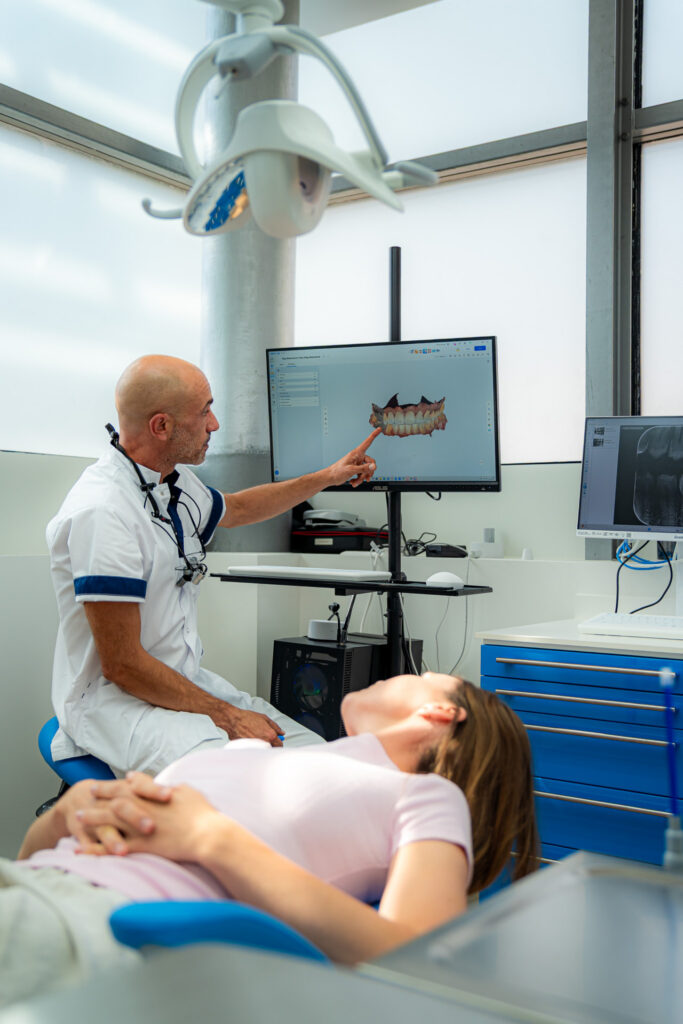
What happens if you do nothing?
When teeth grinding or jaw clenching leads to clear wear or overloading, delay can allow damage to increase further. This usually happens gradually. That is why the risk is often underestimated.
Not everyone who grinds has damage straight away. But when wear, fracture or overloading is visible, protection can be important.
Further wear
Tooth enamel is strong, but it does not grow back. Repeated grinding can flatten teeth and wear away sharp edges. As wear progresses, the teeth can become more sensitive and repair can become more complicated.
Sensitive teeth
When enamel becomes thinner or the necks of the teeth are exposed, teeth can become more sensitive to cold, heat, sweet foods or pressure. Sensitivity can also have other causes, such as decay, leaking fillings or receding gums. That is why assessment is important.
Cracks or fractures
Long-term overloading can contribute to cracks in teeth, fracture of fillings or breaking of tooth edges. Sometimes people only notice there is a problem when a piece of tooth or filling breaks off.
Loading of crowns, veneers and implants
Restorations can be heavily loaded by grinding. Veneers can chip, crowns can suffer ceramic damage and implant structures can be mechanically overloaded. In such situations a night guard can help distribute forces better and protect restorations.
When the risk becomes more urgent
Assessment is especially important when:
- wear seems to be increasing quickly;
- pieces of tooth or filling break off repeatedly;
- teeth are becoming more sensitive;
- pain develops when chewing;
- a crown, veneer or implant structure is damaged;
- an old night guard has visibly worn through;
- jaw problems are increasing.
The aim is not to cause alarm. The aim is to prevent damage before extensive repair becomes necessary.
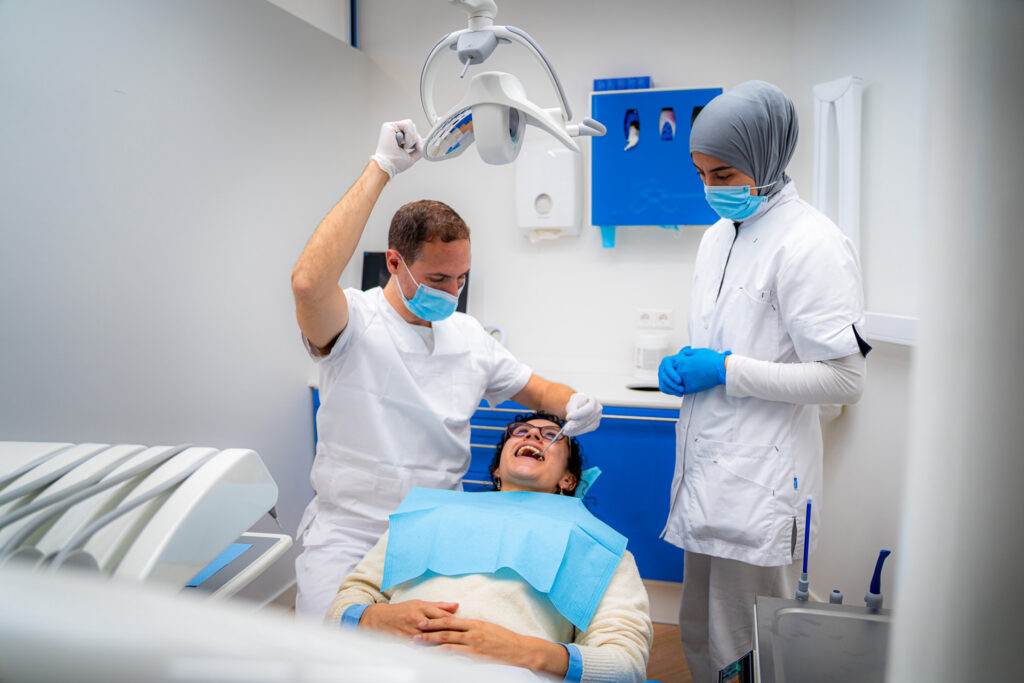
Getting used to a night guard and everyday use
Most people need to get used to a night guard. That is normal. A night guard feels different the first few nights, because suddenly there is something over your teeth. Good explanation and any necessary adjustment make the difference between a night guard that is worn and one that ends up in the drawer.
What is normal at the beginning?
At first you may notice that:
- the night guard feels tight;
- you produce more saliva;
- speaking feels a little different;
- you are aware of the night guard;
- your jaw needs a moment to adjust;
- you wake up more often the first few nights because of the new sensation.
These symptoms often decrease when you wear the night guard regularly. However, it should not press sharply, cause pain or keep coming out.
When should the night guard be adjusted?
Contact the dentist when:
- the night guard hurts;
- pressure spots develop;
- the night guard is too loose;
- you cannot put it in or take it out properly;
- the bite feels uncomfortable;
- symptoms increase;
- the night guard becomes damaged;
- you have had new fillings, crowns or veneers placed;
- you wear the night guard less because it is uncomfortable.
A small adjustment can make a big difference to comfort and wearability.
How do you clean the night guard?
Clean the night guard daily. Rinsing with cold or lukewarm water and gently cleaning with a soft brush is usually enough. Do not use hot water, as the plastic can warp. Store the night guard dry and clean in a case when you are not wearing it.
The dentist can explain which cleaning products are suitable for the specific material of your night guard. It is better not to use aggressive products without advice, because they can damage the material.
How long does a night guard last?
Lifespan differs per patient. Someone who grinds or clenches heavily wears out a night guard faster than someone with a light load. Material, care and changes in the teeth also play a part.
Have your night guard checked when you notice it is becoming thinner, cracking, fitting more loosely or no longer feels comfortable. The fit can also change after larger dental treatments.
What if you cannot wear the night guard comfortably?
Some patients postpone treatment because they are afraid they will not be able to sleep with a night guard. That concern is understandable. Comfort depends strongly on fit, design, thickness and any adjustment.
If a night guard does not feel comfortable, that does not automatically mean you “can’t cope with it”. Often it needs to be checked whether the guard fits well, whether the bite is evenly distributed and whether there are pressure spots. So do not give up too quickly without a check; discuss any discomfort with the dentist.
Getting a night guard made at 3D Tandarts in Schiedam
At 3D Tandarts in Schiedam you can come for an assessment of teeth grinding, jaw clenching, tooth wear and a custom-made occlusal splint when that makes sense. Our approach starts with understanding what is going on.
Local assessment of grinding, clenching and wear
A local assessment is valuable because grinding and clenching are not only about the night guard. The dentist looks at your teeth, bite, jaw muscles, symptoms and any restorations. This gives you advice that suits your situation.
For patients from Schiedam and the surrounding area this is practical: you can not only have the night guard made, but also come back for a check, adjustment or assessment of new symptoms.
Digital scan and custom solution
3D Tandarts works with modern digital dentistry. An intraoral scan can help to record your teeth accurately and design a custom solution.
This is especially important for patients with wear, crowns, veneers, bridges or implants. A night guard must not only fit, but also work functionally within your bite.
Check-ups and aftercare close to home
A night guard sometimes needs aftercare. Perhaps it feels too tight at first. Perhaps a pressure spot develops. Perhaps your teeth change because of a new filling or crown. In that case it is good to have a check-up close by.
Local aftercare is an important difference from many online solutions. You are not on your own when the night guard does not fit well or when you have doubts.
For patients from Schiedam, the Rotterdam region and Vlaardingen
3D Tandarts is based in Schiedam and is also a convenient choice for patients from the Rotterdam region, Vlaardingen and other parts of South Holland who are looking for a local dentist for grinding, clenching or tooth wear.
Treatment stays local, personal and easy to monitor: from assessment to scan, fitting and aftercare.
Why local care is practical for a night guard
A night guard is not a product you receive once and never need to have checked again. Your teeth can change, restorations can be placed and the night guard itself can wear. Especially when you have symptoms or doubts, it is reassuring to be able to quickly have it checked to see whether the night guard still fits well.
For patients in Schiedam and the surrounding area this means: a lower threshold for aftercare and more certainty that the night guard will keep working well in the longer term.
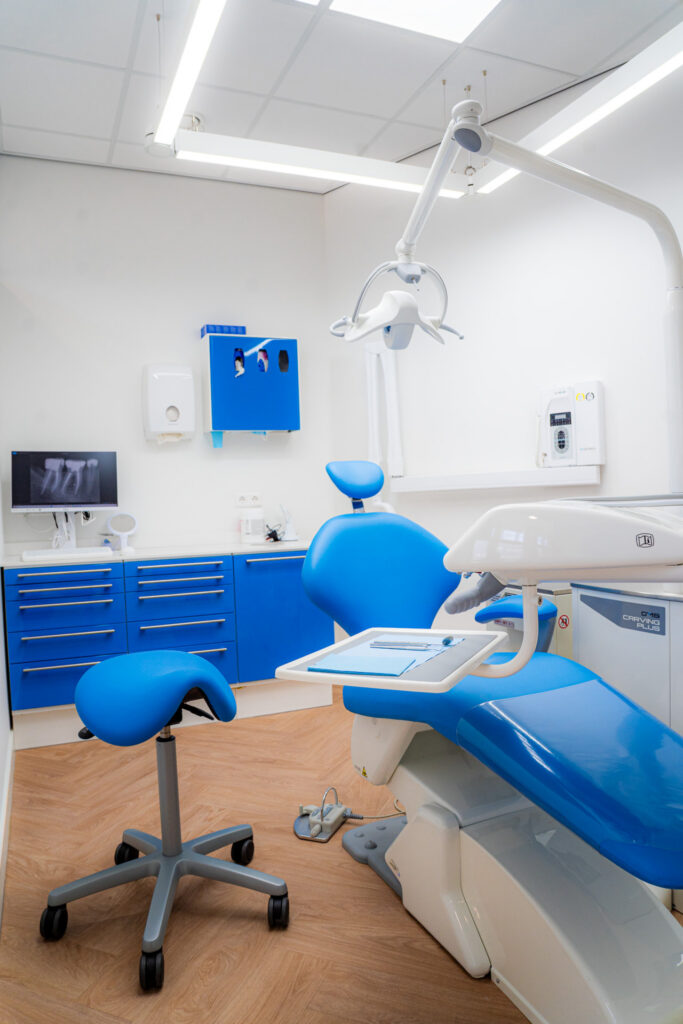
When is the best time to book an appointment?
Book an appointment when you are unsure whether you grind or clench, when you see wear or when you have symptoms that may fit with overloading of the teeth or jaw muscles. A consultation helps to determine whether a night guard makes sense or whether something else needs to be investigated.
If you are unsure about grinding or clenching
Being unsure is a good reason for an assessment. You do not have to be certain that you grind. The dentist can help to recognise the signs and explain what they mean.
With visible wear or sensitive teeth
Do you see that your teeth are becoming flatter, edges are chipping or teeth are becoming more sensitive? Then it is wise not to wait until more damage occurs.
With jaw pain, headaches or muscle pain
Jaw tension, headaches when waking up or painful chewing muscles can fit with grinding or clenching. Because these symptoms can have several causes, a proper assessment is important.
With damaged restorations or an old night guard
Do you have a broken filling, a damaged crown, a loose veneer or an old night guard that no longer fits well? Have it checked. An outdated or poorly fitting night guard may not give enough protection.
If you are considering an online night guard
Are you considering an online or off-the-shelf night guard to save money? If in doubt, have your teeth assessed first. That way you will know whether there is wear, restoration damage, strain on the jaw or another cause. That helps you make a choice that not only looks cheap, but is also responsible.
Would you like to know whether a night guard makes sense for you? Then book an assessment at 3D Tandarts in Schiedam. The aim is clarity: what is going on, what risk are your teeth at and which solution suits you?
Frequently asked questions
Frequently asked questions about night guards
Does a night guard help against teeth grinding?
A night guard mainly helps to protect the teeth from the consequences of teeth grinding. The guard does not always prevent you from grinding, but it means teeth rub against each other less directly. In some patients jaw tension or muscle complaints also decrease, but this differs from situation to situation.
Does a night guard stop the grinding?
Not always. A night guard is usually not a remedy that completely removes the cause of bruxism. Its main purpose is to protect the teeth. If you keep clenching or grinding, the guard absorbs part of the load. With persistent jaw problems, additional support may be needed.
Is a night guard the same as an occlusal splint?
In practice the terms are often used interchangeably. “Night guard” is the term patients often use. “Occlusal splint” or “splint” are more dental terms. Usually it is a custom-made appliance that fits over the teeth to limit wear and overloading.
What is the difference between teeth grinding and jaw clenching?
With teeth grinding, teeth move forcefully over each other. With jaw clenching, the teeth are pressed firmly together without much movement. Both can cause wear, muscle complaints and overloading, but the approach can differ. That is why it is important to discuss your symptoms and habits properly.
What does a night guard cost at the dentist?
The cost depends on the type of occlusal splint, the material, the laboratory and material costs, the registration needed and the check-ups. A reliable price estimate is only possible after your teeth and bite have been assessed. So always ask for a breakdown of the costs before you decide.
Is a night guard reimbursed?
That depends on your supplementary dental insurance. For adults, dental care is usually not covered as standard by the basic health insurance. Reimbursement differs per policy. Check your conditions or ask your insurer which reimbursement applies to an occlusal splint or night guard.
Why is a dentist-made night guard more expensive than an online one?
A dentist-made night guard is usually more expensive because it is made after a clinical assessment, scan or impression, bite check, choice of material and fitting. Aftercare and any adjustment also play a part. With an online night guard the dental diagnosis is often missing, so you cannot be sure the guard suits your problem.
What happens if I keep grinding my teeth?
When grinding or clenching leads to overloading, the teeth can wear down further. Possible consequences are sensitive teeth, cracks, fracture of fillings or extra load on crowns, veneers and implants. Not everyone gets the same damage, but visible wear is a reason to consider protection.
Can teeth grinding damage crowns, veneers or implants?
Yes, long-term overloading can put strain on restorations. Crowns and veneers are strong, but can be damaged by repeated high forces. Implant structures also need to be properly protected against overloading. That is why assessing grinding and clenching is especially important with extensive restorative work.
How long does it take to get used to a night guard?
For the first few nights a night guard can feel strange or tight. That is normal. You may also temporarily notice more saliva. However, the guard should not cause persistent pain, pressure spots or come out. If it does, it needs to be checked and possibly adjusted.
What if my night guard does not feel right?
Do not carry on with it for too long. A night guard that hurts or does not fit well is often worn less. Contact the dentist for a check. Sometimes a small adjustment is enough to greatly improve comfort.
How do I clean a night guard?
Rinse the night guard daily with cold or lukewarm water and gently clean it with a soft brush. Do not use hot water, as the material can warp. Store the night guard clean and dry in a case. Ask the dentist which cleaning method is suitable for your specific night guard.
How long does a night guard last?
That differs from person to person. The lifespan depends on how much you grind or clench, the material, care and changes in your teeth. Have the night guard checked when it becomes thinner, cracks, fits more loosely or no longer feels comfortable.
Can a night guard help with headaches?
Sometimes, especially when headaches are related to overloading of the chewing muscles or jaw clenching. But headaches can have many causes. A dentist can assess whether there are indications that your symptoms are related to bruxism, bite loading or the jaw muscles.
Why have a night guard made by the dentist?
Because the dentist first assesses whether you actually need protection and which type of night guard suits your teeth. This takes into account wear, bite, jaw problems and restorations. A dentist-made night guard can also be checked and adjusted, which is important for comfort and protection.
Can I first just have an assessment of whether I need a night guard?
Yes. A consultation does not automatically mean you have to have a night guard made. The aim is first to understand what is going on. Then the dentist discusses whether a night guard makes sense, or whether monitoring, other advice or further examination is more appropriate.
Can I have a night guard made in Schiedam?
Yes, at 3D Tandarts in Schiedam you can come for an assessment of teeth grinding, jaw clenching and tooth wear. When a night guard makes sense, a custom-made occlusal splint can be made and checked.
Is 3D Tandarts also accessible for patients from Rotterdam or Vlaardingen?
Yes. 3D Tandarts in Schiedam is also a convenient choice for patients from the Rotterdam region, Vlaardingen and surroundings who are looking for a local dentist for grinding, clenching, jaw problems or tooth wear. Local checks and aftercare are especially useful when a night guard needs to be adjusted.
Conclusion: first have your teeth assessed to see what they need
A night guard can be a valuable solution for teeth grinding, jaw clenching and tooth wear. It protects the teeth from further overloading and can help limit damage to fillings, crowns, veneers, bridges and implants.
At the same time, it is important to stay realistic. A night guard does not always stop the grinding and is not the only solution for every complaint. Jaw pain, headaches, sensitive teeth and wear must be carefully assessed, so that it becomes clear what the cause is and which approach makes sense.
Do you have sensitive teeth, visible wear, jaw tension, morning headaches, damaged restorations, an old night guard or are you unsure whether you grind? Then it is wise to have your teeth checked.
At 3D Tandarts in Schiedam we carefully assess whether a night guard makes sense in your situation. You receive a clear explanation of the diagnosis, the possible treatment, the costs and what you can realistically expect. That way you can decide with confidence what is right for your teeth.

Focus areas: Endodontics and Digital Implantology · BIG registration: 29919697202
Knowledge base
Latest articles

Hidden root canals: why a tooth can keep causing problems after root canal treatment
Pain after root canal treatment? Learn how a hidden or missed canal happens and how the microscope and CBCT help. Book an assessment in Schiedam.

Surgical microscope for root canal treatment in Schiedam
What does a surgical microscope do in root canal treatment? See how precision and CBCT help save your tooth. Book at 3D Tandarts in Schiedam.
Implant consultation in Schiedam: find out which treatment suits you
Is a dental implant right for you? Find out what an implant consultation in Schiedam involves: examination, advice and a treatment plan. Book today.
Questions about your situation?
During a consultation we look at your situation and discuss the options.